LPC2925FBD100
ARM9 microcontrollers with 512KB flash memory in 100-pin LQFP format
Manufacturer: nxp
series introduction
# Introduction to the LPC2925FBD100 Product Series
## 1. Overview
The LPC2925FBD100 is a remarkable product series within the realm of microcontrollers, designed and engineered to meet the diverse and demanding requirements of modern electronic systems. Developed by a leading semiconductor manufacturer, this series combines high - performance computing capabilities with a rich set of integrated peripherals, making it an ideal choice for a wide range of applications.
## 2. Key Features
### 2.1 Processor Core
- **ARM Architecture**: The LPC2925FBD100 is based on the ARM Cortex - M3 processor core. This architecture is renowned for its high - performance, low - power consumption, and excellent code density. The Cortex - M3 core features a 32 - bit RISC architecture with a Harvard architecture, which allows for simultaneous access to instructions and data, significantly improving processing speed.
- **High Clock Speed**: It operates at a maximum clock speed of up to 100 MHz, enabling it to handle complex tasks and algorithms efficiently. This high clock speed makes it suitable for applications that require real - time processing, such as industrial control systems and automotive electronics.
### 2.2 Memory
- **Flash Memory**: The device is equipped with a large amount of on - chip flash memory. This non - volatile memory is used to store the program code, allowing for easy reprogramming and updates. The ample flash memory capacity ensures that even large and complex applications can be stored and executed on the microcontroller.
- **SRAM**: In addition to flash memory, the LPC2925FBD100 has a significant amount of static random - access memory (SRAM). SRAM provides fast and temporary storage for data during program execution, reducing the need for external memory and improving overall system performance.
### 2.3 Peripherals
- **Communication Interfaces**: It offers a wide range of communication interfaces, including UART (Universal Asynchronous Receiver - Transmitter), SPI (Serial Peripheral Interface), and I2C (Inter - Integrated Circuit). These interfaces enable seamless communication with other devices, such as sensors, actuators, and external memory modules. For example, the UART interface can be used to communicate with a PC or other serial devices, while the SPI interface is suitable for high - speed data transfer between the microcontroller and external chips.
- **Analog - to - Digital Converters (ADCs)**: The product series includes multiple ADC channels. These ADCs can convert analog signals from sensors, such as temperature sensors and pressure sensors, into digital values that can be processed by the microcontroller. The high - resolution ADCs ensure accurate measurement of analog signals, making the LPC2925FBD100 suitable for applications in the field of instrumentation and control.
- **Timers and Counters**: There are several timers and counters available on the microcontroller. These can be used for a variety of purposes, such as generating precise timing signals, measuring time intervals, and controlling the speed of motors. The timers can be configured in different modes, providing flexibility for different application requirements.
### 2.4 Power Management
- **Low - Power Modes**: The LPC2925FBD100 is designed with power - saving in mind. It offers multiple low - power modes, such as sleep mode and deep - sleep mode. In these modes, the microcontroller consumes significantly less power while still maintaining essential functions. This makes it suitable for battery - powered applications, where power efficiency is crucial.
- **Power Supply Options**: The device supports a wide range of power supply voltages, allowing it to be used in different power environments. It can operate from a single power supply, simplifying the power management design
Images for reference
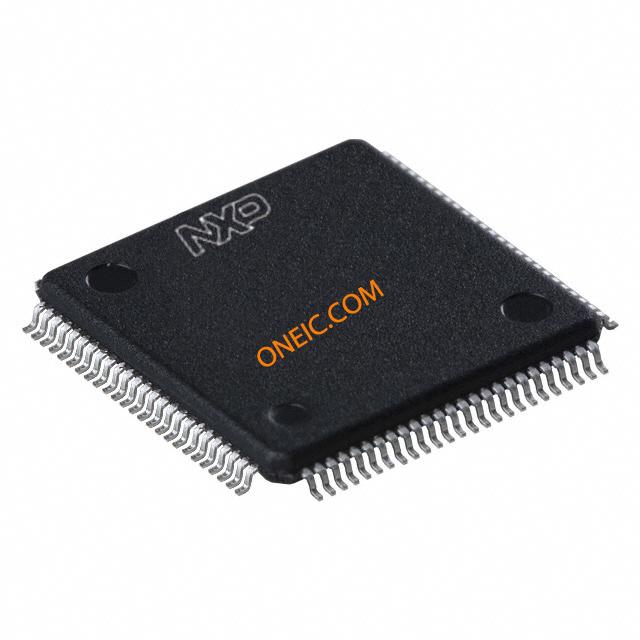
100-LQFP SOT407-1

100-LQFP
Image Preview