LPC2923FBD100,551
16/32-bit ARM968E-S microcontrollers with 256KB Flash and 100-pin LQFP packaging
Manufacturer: nxp
series introduction
# Introduction to the LPC2923FBD100,551 Product Series
## 1. Overview
The LPC2923FBD100,551 belongs to a highly advanced and versatile product series designed to meet the diverse needs of modern electronic systems. This series is part of a broader family of microcontrollers that offer a combination of high - performance computing, rich peripheral features, and excellent power efficiency.
## 2. Key Features
### 2.1 Processor Core
- **ARM Architecture**: The LPC2923FBD100,551 is based on the ARM Cortex - M3 or ARM Cortex - M4 core (depending on the specific variant). These cores are known for their high - performance processing capabilities, with a 32 - bit instruction set that enables fast execution of complex algorithms. The ARM architecture also provides a large address space, allowing for the efficient handling of large amounts of data.
- **High Clock Speed**: It operates at a relatively high clock speed, which can reach up to [X] MHz. This high clock speed ensures quick response times and smooth operation of applications, making it suitable for real - time systems.
### 2.2 Memory
- **Flash Memory**: The device is equipped with a substantial amount of on - chip flash memory, typically [X] kilobytes. Flash memory is non - volatile, which means that the program code stored in it is retained even when the power is turned off. This allows for easy storage and execution of user applications.
- **SRAM**: There is also a significant amount of static random - access memory (SRAM), usually [X] kilobytes. SRAM provides fast access to data, enabling efficient data processing and buffering during program execution.
### 2.3 Peripherals
- **GPIO (General - Purpose Input/Output)**: A large number of GPIO pins are available, which can be configured as either input or output pins. These pins can be used to interface with external devices such as sensors, actuators, and displays. The GPIO pins also support features like interrupts, allowing for event - driven programming.
- **UART (Universal Asynchronous Receiver/Transmitter)**: Multiple UART interfaces are provided, which are commonly used for serial communication. UARTs can be used to communicate with other microcontrollers, computers, or serial - based sensors and modules. They support various baud rates, making them compatible with a wide range of devices.
- **SPI (Serial Peripheral Interface)**: The SPI interface is available for high - speed serial communication between the microcontroller and external devices. It is often used to communicate with flash memories, sensors, and other high - speed peripherals. SPI offers a simple and efficient way to transfer data in a master - slave configuration.
- **I2C (Inter - Integrated Circuit)**: The I2C interface is used for short - distance, multi - master serial communication. It is commonly used to connect low - speed devices such as sensors, EEPROMs, and real - time clocks. The I2C interface supports multiple devices on the same bus, reducing the number of required pins.
- **ADC (Analog - to - Digital Converter)**: An ADC is integrated into the device, which can convert analog signals from sensors into digital values. This allows the microcontroller to interface with a wide range of analog sensors, such as temperature sensors, pressure sensors, and light sensors. The ADC typically has a high resolution, providing accurate digital representations of the analog input.
### 2.4 Power Management
- **Low - Power Modes**: The LPC2923FBD100,551 offers multiple low - power modes, such as sleep mode, deep - sleep mode, and standby mode.
Images for reference
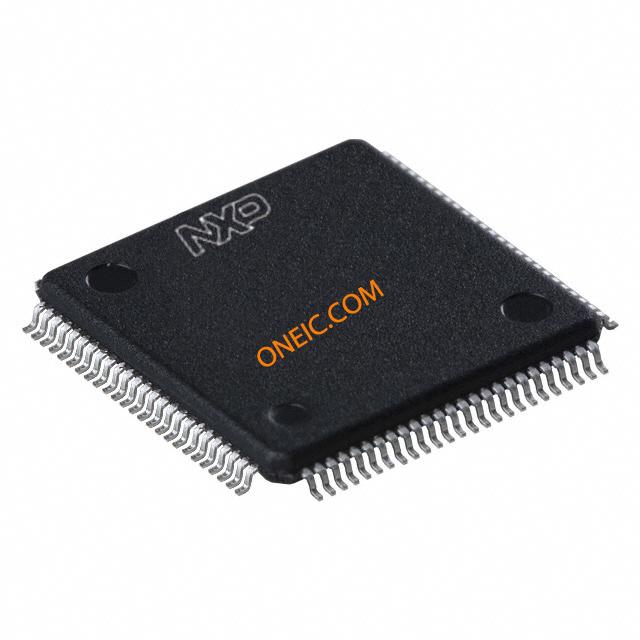
100-LQFP SOT407-1

100-LQFP

Image Preview