LPC2921FBD100
16/32-bit ARM microcontrollers with 128KB Flash for embedded systems
Manufacturer: nxp
series introduction
# Introduction to the LPC2921FBD100 Product Series
## 1. Overview
The LPC2921FBD100 is a remarkable product series within the realm of microcontrollers, developed by a leading semiconductor manufacturer. These microcontrollers are designed to offer high - performance, flexibility, and reliability for a wide range of applications. With their advanced features and capabilities, they have become a popular choice among engineers and developers in various industries.
## 2. Key Features
### 2.1 Processor Core
- **ARM Architecture**: The LPC2921FBD100 is based on the ARM Cortex - M3 processor core. This architecture is known for its high - performance, low - power consumption, and excellent code density. The Cortex - M3 core provides a 32 - bit processing capability, enabling fast execution of complex algorithms and tasks.
- **High Clock Speed**: It operates at a maximum clock speed of up to 100 MHz, which allows for rapid data processing and efficient handling of real - time applications. This high clock speed ensures that the microcontroller can respond quickly to external events and perform tasks with minimal latency.
### 2.2 Memory
- **Flash Memory**: The device is equipped with a large amount of on - chip flash memory. This non - volatile memory is used to store the program code, allowing for easy reprogramming and updates. The ample flash memory capacity enables the implementation of complex applications and the storage of large data sets.
- **SRAM**: In addition to flash memory, the LPC2921FBD100 has a significant amount of static random - access memory (SRAM). SRAM provides fast access to data, which is crucial for the efficient execution of programs. It can be used to store variables, buffers, and intermediate results during program execution.
### 2.3 Peripherals
- **UART, SPI, and I2C Interfaces**: These communication interfaces are essential for connecting the microcontroller to other devices. The Universal Asynchronous Receiver - Transmitter (UART) allows for serial communication with external devices such as sensors, displays, and other microcontrollers. The Serial Peripheral Interface (SPI) provides a high - speed serial communication option, suitable for connecting to devices like SD cards and external sensors. The Inter - Integrated Circuit (I2C) interface is commonly used for communication with low - speed devices such as EEPROMs and sensors.
- **GPIO Pins**: The LPC2921FBD100 has a large number of General - Purpose Input/Output (GPIO) pins. These pins can be configured as either input or output pins, allowing for easy connection to external components such as switches, LEDs, and relays. The GPIO pins provide a flexible way to interface with the external world and control various devices.
- **Timers and Counters**: Multiple timers and counters are integrated into the microcontroller. These can be used for a variety of purposes, such as generating precise time delays, measuring time intervals, and controlling PWM (Pulse - Width Modulation) signals. PWM signals are commonly used for motor control, LED dimming, and other applications that require variable power output.
### 2.4 Power Management
- **Low - Power Modes**: The LPC2921FBD100 offers several low - power modes, including sleep mode, deep - sleep mode, and power - down mode. These modes are designed to reduce power consumption when the microcontroller is not actively performing tasks. By entering low - power modes, the device can conserve energy, which is especially important for battery - powered applications.
- **Power Supply Options**: The microcontroller supports a wide range of power supply voltages, providing flexibility in different application scenarios. It can be powered from a
Images for reference
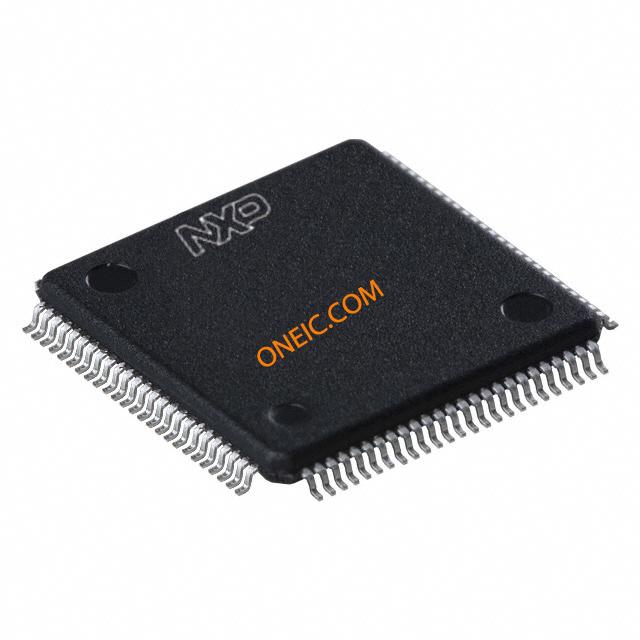
100-LQFP SOT407-1

100-LQFP
Image Preview