LPC2919FBD144/01/,
32-bit ARM9 microcontrollers with 768KB flash, 144-pin LQFP packaging
Manufacturer: nxp
series introduction
# Introduction to the LPC2919FBD144/01 Product Series
## 1. Overview
The LPC2919FBD144/01 belongs to a high - performance product series developed by NXP Semiconductors. It is a microcontroller unit (MCU) that combines advanced features, high - speed processing capabilities, and a rich set of peripherals, making it suitable for a wide range of applications in the embedded systems domain.
## 2. Key Features
### 2.1 Processor Core
- **ARM Cortex - M3 Core**: At the heart of the LPC2919FBD144/01 is the ARM Cortex - M3 processor core. This core offers a high - performance, low - power solution with a 32 - bit architecture. It has a Harvard architecture with separate instruction and data buses, enabling efficient data transfer and execution of instructions. The Cortex - M3 core also includes a nested vectored interrupt controller (NVIC), which allows for fast and efficient handling of interrupts, crucial for real - time applications.
- **High Clock Speed**: The microcontroller can operate at a relatively high clock speed, which enables it to execute complex algorithms and handle large amounts of data in a short period. This high - speed operation is beneficial for applications that require quick response times, such as motor control and industrial automation.
### 2.2 Memory
- **Flash Memory**: The LPC2919FBD144/01 is equipped with a significant amount of on - chip flash memory. Flash memory is non - volatile, which means it retains its data even when the power is turned off. This makes it ideal for storing the program code of the application. The large flash memory capacity allows for the implementation of complex software algorithms and the storage of additional data, such as configuration parameters.
- **SRAM**: In addition to flash memory, the microcontroller has a substantial amount of static random - access memory (SRAM). SRAM provides fast access to data, which is essential for the efficient execution of programs. It is used for storing variables, stack, and heap data during the runtime of the application.
### 2.3 Peripherals
#### 2.3.1 Communication Interfaces
- **UART (Universal Asynchronous Receiver - Transmitter)**: Multiple UART interfaces are available on the LPC2919FBD144/01. UART is a widely used serial communication protocol that allows the microcontroller to communicate with other devices, such as sensors, displays, and other microcontrollers. It is simple to implement and can operate at various baud rates, making it suitable for different communication requirements.
- **SPI (Serial Peripheral Interface)**: The SPI interface provides a high - speed serial communication option. It is commonly used for communicating with external devices such as flash memories, ADCs (Analog - to - Digital Converters), and DACs (Digital - to - Analog Converters). SPI allows for full - duplex communication and can achieve high data transfer rates.
- **I2C (Inter - Integrated Circuit)**: The I2C interface is a multi - master, multi - slave serial communication protocol. It is used for connecting low - speed devices, such as sensors and EEPROMs, to the microcontroller. I2C uses a two - wire interface, which simplifies the hardware design and reduces the number of pins required for communication.
#### 2.3.2 Timers and Counters
- **General - Purpose Timers**: The microcontroller includes several general - purpose timers. These timers can be used for a variety of applications, such as generating PWM (Pulse - Width Modulation) signals for motor control, measuring time intervals, and implementing delay functions
Images for reference

144-LQFP
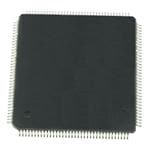
Image Preview
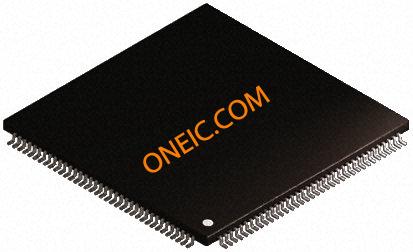
Image Preview