LPC2364FBD100
ARM7TDMI-S microcontrollers with USB, CAN, and 128KB flash memory
Manufacturer: nxp
series introduction
# Introduction to the LPC2364FBD100 Product Series
## 1. Overview
The LPC2364FBD100 is a member of a highly versatile and powerful microcontroller product series developed by NXP Semiconductors. These microcontrollers are designed to meet the diverse needs of embedded systems across a wide range of industries, including industrial automation, consumer electronics, automotive, and more. With its advanced features, high - performance capabilities, and rich set of peripherals, the LPC2364FBD100 offers an ideal solution for developers looking to create innovative and efficient embedded applications.
## 2. Key Features
### 2.1 Processor Core
- **ARM7TDMI - S Core**: The LPC2364FBD100 is based on the ARM7TDMI - S 32 - bit RISC processor core. This core provides a high level of performance with a clock speed of up to 72 MHz, enabling fast execution of instructions and efficient data processing. The ARM7 architecture is well - known for its low power consumption, making it suitable for battery - powered and energy - efficient applications.
- **Thumb Instruction Set**: It supports the Thumb instruction set, which allows for a more compact code size compared to traditional 32 - bit instructions. This is beneficial for applications with limited memory resources, as it reduces the overall code footprint and can lead to cost savings by using smaller memory chips.
### 2.2 Memory
- **On - Chip Flash Memory**: The microcontroller comes with 512 KB of on - chip flash memory. This non - volatile memory is used to store the application code, allowing for easy reprogramming and updates. The flash memory has a high endurance, ensuring reliable long - term storage of the code.
- **Static Random - Access Memory (SRAM)**: There is 40 KB of on - chip SRAM available for data storage and processing. The SRAM provides fast access to data, enabling quick read and write operations, which is crucial for real - time applications.
### 2.3 Peripherals
#### 2.3.1 Communication Interfaces
- **Universal Serial Bus (USB)**: The LPC2364FBD100 features a full - speed USB 2.0 device interface. This allows the microcontroller to communicate with a host computer or other USB - enabled devices easily. It can be used for data transfer, firmware updates, and device configuration, making it suitable for applications such as USB - based sensors, data loggers, and human - interface devices.
- **UARTs (Universal Asynchronous Receiver - Transmitter)**: There are multiple UARTs available, typically 4 in the LPC2364FBD100. UARTs are widely used for serial communication with other devices, such as sensors, displays, and modems. They support a wide range of baud rates, allowing for flexible communication options.
- **SPI (Serial Peripheral Interface)**: The SPI interface provides a high - speed serial communication protocol. It is commonly used for communicating with external devices such as flash memories, ADCs (Analog - to - Digital Converters), and DACs (Digital - to - Analog Converters). The SPI interface supports multiple slave devices, enabling efficient communication in a multi - device system.
- **I²C (Inter - Integrated Circuit)**: The I²C interface is a popular two - wire serial communication protocol used for connecting low - speed devices. It is often used for communicating with sensors, EEPROMs, and other integrated circuits. The LPC2364FBD100's I²C interface supports both master and slave modes, providing flexibility in system design.
#### 2
Images for reference
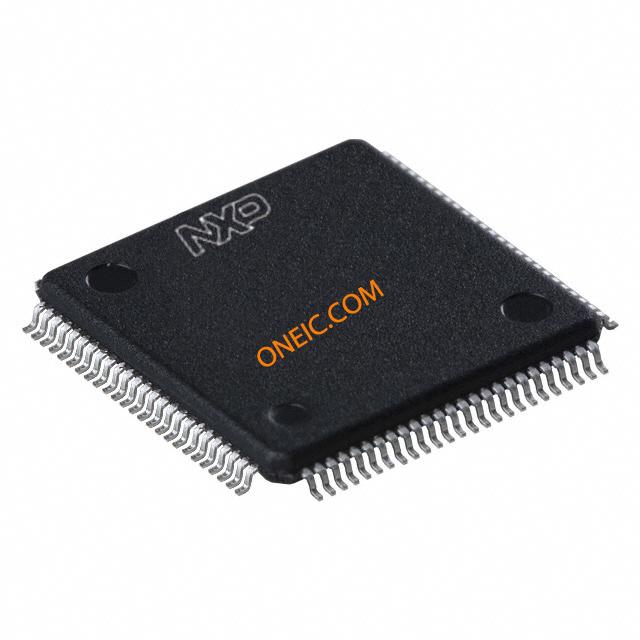
100-LQFP SOT407-1

100-LQFP
Image Preview