LPC2290FBD144/01
ARM7 microcontrollers with 16-bit/32-bit RISC architecture in 144-pin LQFP packages
Manufacturer: nxp
series introduction
# Introduction to the LPC2290FBD144/01 Product Series
## 1. Overview
The LPC2290FBD144/01 belongs to a highly regarded product series in the realm of microcontrollers. Developed by a leading semiconductor manufacturer, this series is designed to offer a powerful and versatile solution for a wide range of embedded applications. With its advanced features and robust performance, it has become a popular choice among engineers and developers in various industries.
## 2. Key Features
### 2.1 Processor Core
- **ARM7TDMI-S Core**: At the heart of the LPC2290FBD144/01 is the ARM7TDMI - S 32 - bit RISC processor core. This core provides high - performance processing capabilities with a clock speed that can be configured to meet the specific requirements of the application. It offers a rich instruction set, enabling efficient execution of complex algorithms and tasks.
- **Harvard Architecture**: The ARM7TDMI - S core utilizes a Harvard architecture, which separates the instruction and data buses. This allows for simultaneous access to instructions and data, significantly improving the overall processing speed and efficiency.
### 2.2 Memory
- **On - Chip Flash Memory**: The device comes with a large amount of on - chip flash memory. In the case of the LPC2290FBD144/01, it typically offers up to 512 KB of flash memory. This non - volatile memory is used to store the application code, allowing for easy reprogramming and updates.
- **On - Chip SRAM**: There is also a substantial amount of on - chip SRAM, usually up to 32 KB. SRAM provides fast access to data, which is crucial for applications that require high - speed data processing and storage. It can be used for variables, buffers, and stack operations.
### 2.3 Peripherals
- **UART (Universal Asynchronous Receiver - Transmitter)**: Multiple UART interfaces are available, which are commonly used for serial communication. They support a wide range of baud rates and can be used to communicate with other devices such as sensors, displays, and communication modules.
- **SPI (Serial Peripheral Interface)**: The SPI interface allows for high - speed serial communication between the microcontroller and external devices. It is often used for connecting to devices like SD cards, sensors, and other integrated circuits.
- **I²C (Inter - Integrated Circuit)**: The I²C interface provides a simple and efficient way to communicate with other I²C - compatible devices. It is widely used for connecting to sensors, EEPROMs, and other low - speed peripheral devices.
- **CAN (Controller Area Network)**: The inclusion of CAN interfaces makes the LPC2290FBD144/01 suitable for automotive and industrial applications. CAN is a robust communication protocol that allows multiple devices to communicate over a single bus, even in noisy environments.
- **PWM (Pulse Width Modulation)**: Multiple PWM channels are available, which are useful for applications such as motor control, LED dimming, and power management. PWM signals can be used to control the power delivered to a device by varying the duty cycle of the signal.
### 2.4 GPIO (General - Purpose Input/Output)
The LPC2290FBD144/01 has a large number of GPIO pins. These pins can be configured as either input or output pins, allowing for easy connection to external devices such as switches, LEDs, and sensors. The GPIO pins can also be used for bit - banging communication protocols or for simple control tasks.
### 2.5 Timer/Counter
- **Multiple Timers**:
Images for reference

144-LQFP
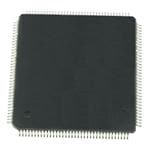
Image Preview