LPC2220FBD144
ARM7-based 16/32-bit microcontrollers with 64KB RAM, ROMless, 144-pin LQFP
Manufacturer: nxp
series introduction
# Introduction to the LPC2220FBD144 Product Series
## 1. Overview
The LPC2220FBD144 belongs to a highly regarded product series in the realm of microcontrollers. Developed by a leading semiconductor manufacturer, this series is designed to offer a powerful, flexible, and cost - effective solution for a wide range of embedded applications. The "LPC2220" represents the core microcontroller model, while "FBD144" refers to the specific package type, which is a 144 - pin Fine - Pitch Ball Grid Array (FBGA).
## 2. Key Features
### 2.1 Processor Core
- **ARM7TDMI - S Core**: At the heart of the LPC2220FBD144 is the ARM7TDMI - S 32 - bit RISC processor core. This core provides high - performance processing capabilities with a clock speed that can reach up to 60 MHz. The ARM7 architecture is well - known for its efficiency, low power consumption, and a rich set of instructions, making it suitable for both simple and complex embedded tasks.
- **Thumb Instruction Set**: In addition to the standard ARM instruction set, the ARM7TDMI - S core supports the Thumb instruction set. Thumb instructions are 16 - bit in length, which allows for more compact code storage. This is particularly beneficial in applications where memory space is limited, as it can reduce the overall code size without sacrificing too much performance.
### 2.2 Memory
- **On - Chip Flash Memory**: The LPC2220FBD144 is equipped with 256 KB of on - chip flash memory. Flash memory is non - volatile, which means that the program code stored in it is retained even when the power is turned off. This makes it ideal for storing the application firmware, and the large capacity allows for the development of relatively complex applications.
- **On - Chip SRAM**: There is 16 KB of on - chip Static Random - Access Memory (SRAM). SRAM provides fast access to data, which is crucial for the efficient execution of programs. It can be used to store variables, intermediate results, and stack data during the operation of the microcontroller.
### 2.3 Peripherals
#### 2.3.1 Serial Communication
- **UARTs (Universal Asynchronous Receiver - Transmitter)**: The microcontroller features two UARTs, which are commonly used for asynchronous serial communication. UARTs can be used to communicate with other devices such as sensors, displays, or other microcontrollers over a serial link. They support a wide range of baud rates, making them compatible with various communication standards.
- **SPI (Serial Peripheral Interface)**: An SPI interface is available, which is a synchronous serial communication protocol. SPI allows for high - speed data transfer between the microcontroller and external devices such as flash memories, ADCs (Analog - to - Digital Converters), or DACs (Digital - to - Analog Converters). It uses a master - slave architecture, where the LPC2220FBD144 can act as the master device to control multiple slave devices.
- **I²C (Inter - Integrated Circuit)**: The I²C interface is a multi - master, multi - slave serial communication protocol. It is widely used for connecting low - speed devices such as EEPROMs, sensors, and real - time clocks. The LPC2220FBD144's I²C interface supports both standard and fast - mode operation, providing flexibility in different application scenarios.
#### 2.3.2 Timers and Counters
- **Multiple Timers**: There are several timers available
Images for reference

144-LQFP
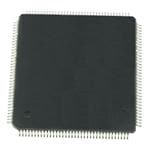
Image Preview

Image Preview