LPC2210FBD144/01
16/32-bit ARM7 microcontrollers with ROMless design and 144-pin LQFP packaging
Manufacturer: nxp
series introduction
# Introduction to the LPC2210FBD144/01 Product Series
## 1. Overview
The LPC2210FBD144/01 belongs to a highly versatile and powerful product series within the realm of microcontrollers. Developed by a leading semiconductor manufacturer, this series is designed to meet the diverse needs of various embedded systems applications. With its advanced features, high - performance capabilities, and robust design, the LPC2210FBD144/01 offers an ideal solution for engineers and developers looking to create innovative and efficient electronic products.
## 2. Key Features
### 2.1 Processor Core
- **ARM7TDMI - S Core**: At the heart of the LPC2210FBD144/01 is the ARM7TDMI - S 32 - bit RISC processor core. This core provides a high - performance computing platform with a clock speed that can reach up to a certain frequency (specific frequency details can be obtained from the official datasheet). The ARM7 architecture offers excellent code density, low power consumption, and a rich set of instructions, enabling efficient execution of complex algorithms and tasks.
- **Thumb Instruction Set**: The support for the Thumb instruction set further enhances the code density. Thumb instructions are 16 - bit in length, which allows for more compact code storage compared to the standard 32 - bit ARM instructions. This is particularly beneficial in applications where memory space is limited.
### 2.2 Memory
- **On - Chip Flash Memory**: The LPC2210FBD144/01 is equipped with a generous amount of on - chip flash memory. This non - volatile memory is used to store the program code of the microcontroller. The large flash memory capacity enables developers to implement complex applications without the need for external memory chips in many cases.
- **Static Random - Access Memory (SRAM)**: Alongside the flash memory, the device also has a significant amount of on - chip SRAM. SRAM provides fast and temporary storage for data during program execution. It allows for quick access to variables and data buffers, which is crucial for high - speed data processing and real - time applications.
### 2.3 Peripherals
- **Universal Asynchronous Receiver/Transmitter (UART)**: Multiple UART interfaces are available on the LPC2210FBD144/01. These interfaces are used for serial communication with other devices such as sensors, displays, or other microcontrollers. UARTs support a wide range of baud rates, making them suitable for different communication requirements.
- **Serial Peripheral Interface (SPI)**: The SPI interface provides a high - speed serial communication protocol. It is commonly used for communicating with external devices such as flash memories, ADCs, and DACs. The SPI interface allows for full - duplex communication and can achieve high data transfer rates.
- **Inter - Integrated Circuit (I2C)**: The I2C interface is a widely used serial communication protocol for connecting multiple devices on a single bus. It is suitable for communicating with low - speed devices such as sensors, EEPROMs, and other integrated circuits. The I2C interface simplifies the hardware design by reducing the number of communication lines.
- **General - Purpose Input/Output (GPIO) Pins**: A large number of GPIO pins are available on the LPC2210FBD144/01. These pins can be configured as either input or output pins, allowing for easy connection to external components such as switches, LEDs, and relays. The GPIO pins can also be used for bit - banging communication protocols if needed.
### 2.4 Power Management
- **Low - Power Modes**: The LPC
Images for reference

144-LQFP
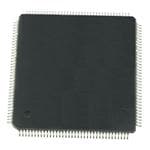
Image Preview
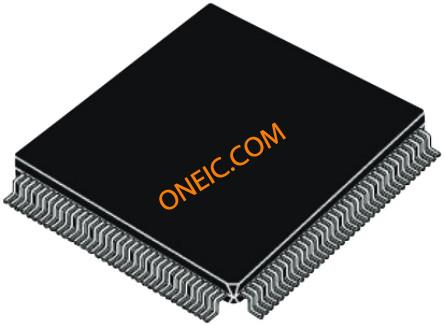
Image Preview