LPC2141FBD64
ARM7 microcontrollers with 32KB Flash, USB, and 64-pin LQFP packaging
Manufacturer: nxp
series introduction
# Introduction to the LPC2141FBD64 Product Series
## 1. Overview
The LPC2141FBD64 is a member of the highly regarded LPC214x series of microcontrollers developed by NXP Semiconductors. These microcontrollers are based on the ARM7TDMI-S core, which combines high performance, low power consumption, and a rich set of on - chip peripherals. The "FBD64" in the part number refers to the specific package type, which is a 64 - pin Fine - Pitch Ball Grid Array (FBGA) package, offering a compact form factor suitable for a wide range of applications.
## 2. Key Features
### 2.1 ARM7TDMI - S Core
- **High - Performance Processing**: The ARM7TDMI - S core provides a 32 - bit RISC architecture with a Harvard memory architecture. It can execute instructions at a clock speed of up to 60 MHz, enabling fast data processing and efficient execution of complex algorithms.
- **Thumb Instruction Set**: In addition to the standard 32 - bit ARM instructions, the core supports the Thumb instruction set. Thumb instructions are 16 - bit in length, which allows for a more compact code size while still maintaining high performance. This is particularly useful in applications where memory space is limited.
### 2.2 Memory
- **On - Chip Flash Memory**: The LPC2141FBD64 is equipped with 32 KB of on - chip flash memory. Flash memory is non - volatile, which means that the program code stored in it is retained even when the power is turned off. This allows for easy reprogramming of the microcontroller, making it suitable for development and production environments.
- **On - Chip SRAM**: It also has 8 KB of on - chip Static Random - Access Memory (SRAM). SRAM provides fast access to data, which is crucial for storing variables, buffers, and intermediate results during program execution.
### 2.3 Peripherals
#### 2.3.1 Serial Communication Interfaces
- **UART (Universal Asynchronous Receiver - Transmitter)**: The microcontroller features two UARTs, which are commonly used for asynchronous serial communication. UARTs can be used to communicate with other devices such as sensors, displays, and computers, using protocols like RS - 232 or RS - 485.
- **SPI (Serial Peripheral Interface)**: There is one SPI interface available. SPI is a synchronous serial communication protocol that allows for high - speed data transfer between the microcontroller and other SPI - compatible devices, such as external memory chips or sensors.
- **I²C (Inter - Integrated Circuit)**: An I²C interface is also provided. I²C is a multi - master, multi - slave serial communication protocol that is widely used for connecting low - speed peripherals, such as EEPROMs, sensors, and real - time clocks.
#### 2.3.2 Timer/Counter Modules
- **Multiple Timers**: The LPC2141FBD64 includes several timer/counter modules. These timers can be used for a variety of purposes, such as generating accurate time delays, measuring time intervals, and generating Pulse - Width Modulation (PWM) signals. PWM signals are commonly used for motor control, LED dimming, and audio signal generation.
#### 2.3.3 Analog - to - Digital Converter (ADC)
- **10 - Bit ADC**: It has a 10 - bit ADC with up to 6 input channels. The ADC can convert analog input signals into digital values, which is useful for applications that require the measurement of analog quantities, such as temperature, voltage,
Images for reference
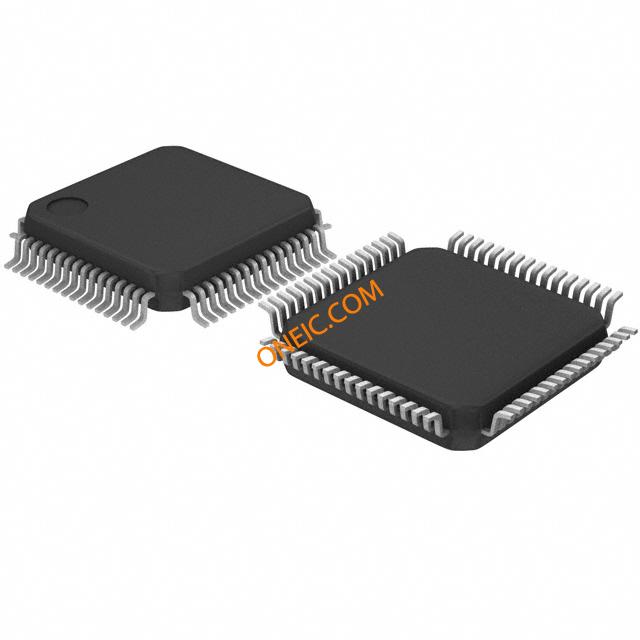
64-LQFP
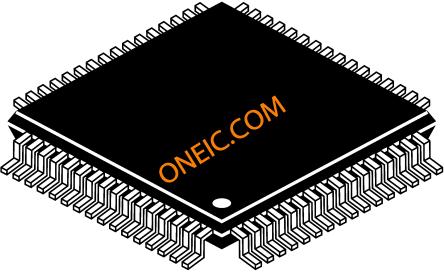
Image Preview
Image Preview