LPC1751FBD80
32-bit ARM Cortex M3 microcontrollers with USB, 100MHz, 80-pin LQFP
Manufacturer: nxp
series introduction
# Introduction to the LPC1751FBD80 Product Series
## 1. Overview
The LPC1751FBD80 is a remarkable member of a product series that belongs to the ARM Cortex - M3 microcontroller family. These microcontrollers are designed to offer a high - performance, low - power, and cost - effective solution for a wide range of embedded applications. With its advanced features and capabilities, the LPC1751FBD80 stands out as a reliable choice for developers looking to create innovative and efficient systems.
## 2. Key Features
### 2.1 Processor Core
- **ARM Cortex - M3 Architecture**: The LPC1751FBD80 is powered by the ARM Cortex - M3 processor core. This core provides a high - performance 32 - bit processing engine with a Harvard architecture, which allows for simultaneous data and instruction access. It has a Thumb - 2 instruction set that combines the code density of 16 - bit Thumb instructions with the performance of 32 - bit ARM instructions.
- **High Clock Speed**: It can operate at a maximum clock speed of up to 100 MHz, enabling fast execution of instructions and efficient handling of complex tasks. This high clock speed makes it suitable for applications that require real - time processing, such as motor control and industrial automation.
### 2.2 Memory
- **Flash Memory**: The device comes with 256 KB of on - chip flash memory. Flash memory is non - volatile, which means it retains its data even when the power is turned off. This large amount of flash memory can be used to store the application code, allowing for the development of feature - rich applications.
- **SRAM**: There is 64 KB of on - chip static random - access memory (SRAM). SRAM provides fast access to data, which is crucial for the efficient execution of programs. It can be used to store variables, buffers, and intermediate results during program execution.
### 2.3 Peripherals
#### 2.3.1 Communication Peripherals
- **UART (Universal Asynchronous Receiver - Transmitter)**: Multiple UART interfaces are available, which are commonly used for serial communication. They can be used to communicate with other devices such as sensors, displays, and other microcontrollers. UARTs support a wide range of baud rates, making them flexible for different communication requirements.
- **SPI (Serial Peripheral Interface)**: The SPI interface allows for high - speed serial communication between the microcontroller and other SPI - compatible devices. It is often used for communicating with external memory chips, sensors, and displays. SPI supports full - duplex communication, enabling simultaneous data transmission and reception.
- **I²C (Inter - Integrated Circuit)**: The I²C interface is a multi - master, multi - slave serial communication protocol. It is widely used for connecting low - speed devices such as sensors, EEPROMs, and real - time clocks. The LPC1751FBD80's I²C interface supports both standard and fast - mode operation.
#### 2.3.2 Timers and Counters
- **General - Purpose Timers**: There are multiple general - purpose timers available, which can be used for a variety of tasks such as generating time delays, measuring time intervals, and generating PWM (Pulse Width Modulation) signals. PWM signals are commonly used for motor control, LED dimming, and audio signal generation.
- **Watchdog Timer**: The watchdog timer is a safety feature that helps to prevent the system from getting stuck in an infinite loop or malfunctioning. If the software fails to reset the watchdog timer within a specified time period, the watchdog timer will generate a reset signal to restart the system
Images for reference

80-LQFP

Image Preview
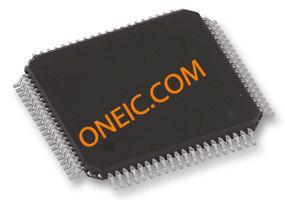
Image Preview