LPC1343FHN33
32-bit ARM Cortex M3 microcontrollers with 32KB Flash, 3.3V, 33-pin HVQFN
Manufacturer: nxp
series introduction
# Introduction to the LPC1343FHN33 Product Series
## 1. Overview
The LPC1343FHN33 is a highly versatile and powerful microcontroller product series developed by NXP Semiconductors. It belongs to the LPC1300 family, which is well - known for its excellent performance, low power consumption, and rich peripheral integration. This series is designed to meet the diverse needs of various embedded applications, ranging from industrial control and automation to consumer electronics and IoT devices.
## 2. Key Features
### 2.1 Processor Core
- **ARM Cortex - M3 Core**: The LPC1343FHN33 is based on the ARM Cortex - M3 32 - bit RISC processor. This core offers high - performance processing capabilities with a maximum operating frequency of up to 72 MHz. It has a Harvard architecture with separate instruction and data buses, enabling efficient data transfer and execution of instructions. The Cortex - M3 also includes a nested vectored interrupt controller (NVIC), which allows for fast and efficient handling of interrupts, making it suitable for real - time applications.
- **Thumb - 2 Instruction Set**: The use of the Thumb - 2 instruction set provides a good balance between code density and performance. It allows for the execution of both 16 - bit and 32 - bit instructions, reducing the memory footprint of the application code while maintaining high processing speed.
### 2.2 Memory
- **Flash Memory**: The LPC1343FHN33 is equipped with 32 KB of in - system programmable flash memory. This non - volatile memory is used to store the application code, and it can be easily reprogrammed in - system, which is very convenient for development and product updates.
- **SRAM**: It has 8 KB of static random - access memory (SRAM). The SRAM is used for storing data during program execution, such as variables, buffers, and stack space. The sufficient SRAM capacity ensures smooth operation of the microcontroller even for relatively complex applications.
### 2.3 Peripherals
#### 2.3.1 Serial Communication
- **UART (Universal Asynchronous Receiver - Transmitter)**: There are two UART interfaces available. UARTs are widely used for asynchronous serial communication, allowing the microcontroller to communicate with other devices such as sensors, displays, and communication modules. They support a wide range of baud rates, making them compatible with different types of serial devices.
- **SPI (Serial Peripheral Interface)**: One SPI interface is provided. SPI is a synchronous serial communication protocol that offers high - speed data transfer. It is commonly used for communicating with external devices such as flash memories, ADCs, and DACs. The SPI interface supports multiple modes of operation, including master and slave modes.
- **I²C (Inter - Integrated Circuit)**: An I²C interface is included, which is a multi - master, multi - slave serial communication protocol. It is used for connecting low - speed devices such as sensors, EEPROMs, and real - time clocks. The I²C interface supports both standard and fast modes, with data transfer rates up to 400 kbps.
#### 2.3.2 Timers
- **General - Purpose Timers**: The LPC1343FHN33 has multiple general - purpose timers. These timers can be used for a variety of applications, such as generating accurate time delays, measuring time intervals, and generating PWM (Pulse Width Modulation) signals. PWM signals are commonly used for controlling motors, LEDs, and other devices that require variable power or speed control.
- **Watchdog Timer**: A watchdog timer is also integrated. The watchdog
Images for reference
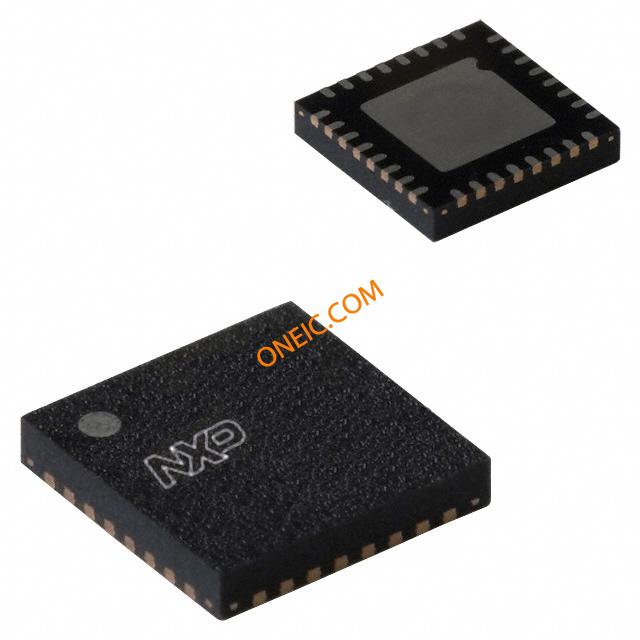
32-HVQFN

Image Preview

Image Preview