LPC1112FHN33/201
32-bit ARM Cortex M0 microcontrollers with low power and compact design
Manufacturer: nxp
series introduction
# Introduction to the LPC1112FHN33/201 Product Series
## 1. Overview
The LPC1112FHN33/201 is a remarkable member of the microcontroller product series developed by NXP Semiconductors. It is designed to offer a high - performance, cost - effective, and energy - efficient solution for a wide range of embedded applications. With its advanced features and capabilities, this microcontroller has become a popular choice among engineers and developers in various industries.
## 2. Key Features
### 2.1 Core and Performance
- **ARM Cortex - M0+ Core**: The LPC1112FHN33/201 is powered by the ARM Cortex - M0+ processor core. This core is known for its excellent balance between performance and power consumption. It operates at a maximum frequency of up to 50 MHz, enabling fast execution of instructions and efficient handling of complex tasks.
- **Instruction Set**: It supports the Thumb - 2 instruction set, which provides a high - density code format. This results in reduced memory requirements and faster code execution, making it suitable for applications where memory space and speed are crucial.
### 2.2 Memory
- **Flash Memory**: The microcontroller comes with 32 KB of on - chip flash memory. This non - volatile memory is used to store the program code, allowing for easy reprogramming and updates. The flash memory has a high endurance, ensuring reliable long - term storage of the application code.
- **SRAM**: There is 8 KB of on - chip static random - access memory (SRAM). SRAM provides fast access to data, which is essential for storing variables, buffers, and intermediate results during program execution. It helps in improving the overall performance of the microcontroller by reducing the time taken to access data.
### 2.3 Peripherals
#### 2.3.1 Serial Communication
- **UART (Universal Asynchronous Receiver - Transmitter)**: The LPC1112FHN33/201 features a UART interface, which is commonly used for asynchronous serial communication. It allows the microcontroller to communicate with other devices such as sensors, displays, and other microcontrollers over a serial link. The UART supports various baud rates, making it compatible with a wide range of external devices.
- **SPI (Serial Peripheral Interface)**: The SPI interface provides a high - speed synchronous serial communication protocol. It is used for communicating with external devices such as flash memories, ADCs (Analog - to - Digital Converters), and DACs (Digital - to - Analog Converters). The SPI interface supports multiple slave devices, enabling the microcontroller to communicate with multiple peripherals simultaneously.
- **I²C (Inter - Integrated Circuit)**: The I²C interface is a multi - master, multi - slave serial communication protocol. It is widely used for connecting low - speed peripherals such as sensors, EEPROMs, and real - time clocks. The I²C interface on the LPC1112FHN33/201 supports standard, fast, and fast - plus modes, providing flexibility in communication speed.
#### 2.3.2 Analog Peripherals
- **ADC (Analog - to - Digital Converter)**: The microcontroller is equipped with a 10 - bit ADC. This ADC can convert analog input signals into digital values, allowing the microcontroller to interface with analog sensors such as temperature sensors, light sensors, and pressure sensors. The ADC has a sampling rate of up to 400 ksps (kilosamples per second), enabling it to capture fast - changing analog signals accurately.
#### 2.3.3 Timers
-
Images for reference
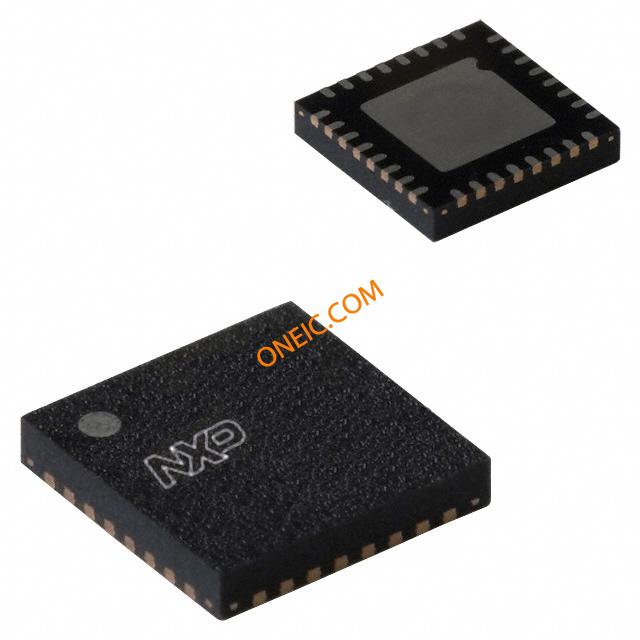
32-HVQFN

Image Preview
Image Preview