LM3S800-IQN50
32-bit ARM Cortex microcontrollers with 64KB flash memory
Manufacturer: ['ti', 'luminary']
series introduction
# Introduction to the LM3S800 - IQN50 Product Series
## 1. Overview
The LM3S800 - IQN50 product series represents a cutting - edge line of microcontrollers developed to meet the diverse and demanding requirements of modern embedded systems. These microcontrollers are designed with a focus on high performance, low power consumption, and rich functionality, making them suitable for a wide range of applications across various industries.
## 2. Key Features
### 2.1 Processor Core
- **ARM Cortex - M3 Architecture**: The LM3S800 - IQN50 series is built around the powerful ARM Cortex - M3 processor core. This core offers a high - performance 32 - bit RISC architecture with a Harvard architecture that allows simultaneous access to instructions and data. It provides a fast and efficient execution environment, enabling the microcontroller to handle complex tasks with ease.
- **High Clock Speed**: These microcontrollers can operate at relatively high clock speeds, which significantly enhances their processing capabilities. The high clock speed allows for quick execution of instructions, reducing the overall processing time and enabling real - time response in time - critical applications.
### 2.2 Memory
- **Flash Memory**: The series is equipped with a generous amount of on - chip flash memory. This non - volatile memory is used to store the program code, allowing for easy reprogramming and updates. The large flash memory capacity enables developers to implement complex algorithms and applications without worrying about running out of storage space.
- **SRAM**: Alongside the flash memory, the LM3S800 - IQN50 microcontrollers have a sufficient amount of on - chip static random - access memory (SRAM). SRAM is used for storing data during program execution, providing fast access times and ensuring smooth operation of the microcontroller.
### 2.3 Peripherals
- **UART (Universal Asynchronous Receiver - Transmitter)**: Multiple UART interfaces are available in the series, which are commonly used for serial communication. UARTs allow the microcontroller to communicate with other devices such as sensors, displays, and other microcontrollers over a serial link, enabling seamless data exchange.
- **SPI (Serial Peripheral Interface)**: The SPI interface provides a high - speed serial communication protocol. It is useful for communicating with external devices such as memory chips, sensors, and displays that support the SPI protocol. The high - speed nature of SPI allows for fast data transfer, making it suitable for applications that require real - time data acquisition.
- **I²C (Inter - Integrated Circuit)**: The I²C interface is a widely used serial communication protocol for connecting multiple devices on a single bus. It is commonly used for communicating with low - speed devices such as sensors, EEPROMs, and other integrated circuits. The I²C interface simplifies the hardware design by reducing the number of communication lines required.
- **GPIO (General - Purpose Input/Output) Pins**: A large number of GPIO pins are available on the LM3S800 - IQN50 microcontrollers. These pins can be configured as either input or output pins, allowing the microcontroller to interface with a variety of external devices such as switches, LEDs, and relays. The GPIO pins provide a flexible way to interact with the external world.
### 2.4 Power Management
- **Low - Power Modes**: The series features multiple low - power modes, including sleep mode, deep - sleep mode, and standby mode. These modes allow the microcontroller to conserve power when it is not actively performing tasks. In low - power modes, the microcontroller can reduce its power consumption significantly, extending the battery life in battery - powered applications.
- **Power - Saving Features**: The microcontroller also incorporates various power - saving features such as dynamic voltage scaling
Images for reference
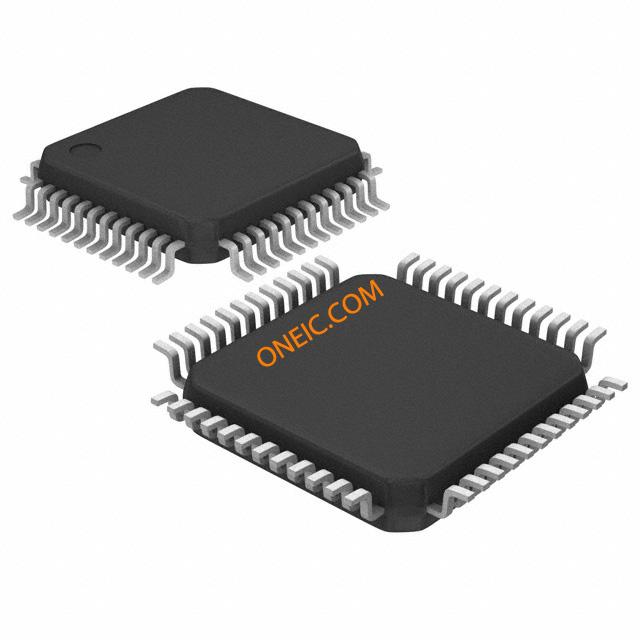
48-LQFP

Image Preview
Image Preview