LM3S6918-IQC50-A2
32-bit ARM Cortex M3 microcontrollers with 256KB flash memory
Manufacturer: ti
series introduction
# Introduction to the LM3S6918 - IQC50 - A2 Product Series
## 1. Overview
The LM3S6918 - IQC50 - A2 belongs to a high - performance microcontroller product series developed by Texas Instruments. These microcontrollers are designed to meet the diverse needs of modern embedded systems, offering a combination of powerful processing capabilities, rich peripheral interfaces, and low - power consumption. They are suitable for a wide range of applications, from industrial control and automation to consumer electronics and automotive systems.
## 2. Key Features
### 2.1 Processor Core
- **ARM Cortex - M3 Core**: The LM3S6918 - IQC50 - A2 is based on the ARM Cortex - M3 processor core. This core provides a high - performance, energy - efficient solution with a 32 - bit architecture. It offers a maximum clock speed of up to [X] MHz, enabling fast execution of instructions and efficient data processing. The Cortex - M3 core also features a Harvard architecture, which allows simultaneous access to instructions and data, further enhancing performance.
- **Thumb - 2 Instruction Set**: The Thumb - 2 instruction set provides a good balance between code density and performance. It allows for the use of both 16 - bit and 32 - bit instructions, reducing code size while maintaining high execution speed. This is particularly beneficial for applications with limited memory resources.
### 2.2 Memory
- **Flash Memory**: The microcontroller is equipped with [X] KB of on - chip flash memory. Flash memory is non - volatile, which means it retains its data even when the power is turned off. This makes it ideal for storing the program code of the embedded system. The flash memory also supports in - system programming (ISP) and in - application programming (IAP), allowing for easy software updates and modifications.
- **SRAM**: There is [X] KB of on - chip static random - access memory (SRAM). SRAM provides fast access to data, which is crucial for the efficient operation of the microcontroller. It is used for storing variables, intermediate results, and stack data during program execution.
### 2.3 Peripheral Interfaces
#### 2.3.1 Universal Serial Bus (USB)
- The LM3S6918 - IQC50 - A2 features a USB 2.0 full - speed interface. This allows the microcontroller to communicate with other USB - enabled devices, such as computers, smartphones, and USB peripherals. The USB interface can be configured as a device, host, or on - the - go (OTG) mode, providing flexibility in different application scenarios.
- It supports various USB classes, such as Human Interface Device (HID), Mass Storage Device (MSD), and Serial Communication Class (CDC), enabling seamless integration with a wide range of USB - compatible software and hardware.
#### 2.3.2 Serial Communication Interfaces
- **UART**: There are multiple universal asynchronous receiver - transmitter (UART) interfaces available. UARTs are commonly used for serial communication with other devices, such as sensors, displays, and other microcontrollers. They support a wide range of baud rates, allowing for flexible communication speeds.
- **SPI**: The serial peripheral interface (SPI) provides a high - speed, synchronous serial communication protocol. It is often used for communicating with external devices such as flash memories, sensors, and displays. The SPI interface supports multiple modes of operation and can achieve high data transfer rates.
- **I²C**: The inter - integrated circuit (I²C) interface is a multi - master, multi - slave serial communication protocol. It is widely used for connecting low - speed devices, such as sensors, EEPROM
Images for reference

100-LQFP
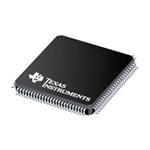
Image Preview
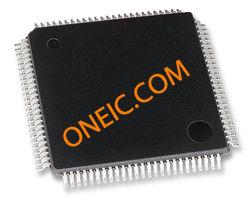
Image Preview