IDT74LVC16245APAG
16-bit bus transceiver in 48-pin TSSOP package for 3.3V systems
Manufacturer: idt
series introduction
# IDT74LVC16245APAG Product Series Introduction
## 1. Overview
The IDT74LVC16245APAG is a high - performance, low - voltage, 16 - bit bidirectional transceiver belonging to the IDT (Integrated Device Technology) product portfolio. This device is designed to provide efficient data transfer between two different systems or buses, making it an essential component in a wide range of digital electronic applications.
## 2. Key Features
### 2.1 Low - Voltage Operation
- It operates at a low supply voltage range, typically from 2.7V to 3.6V. This low - voltage characteristic makes it suitable for battery - powered devices, as it helps to reduce power consumption and extend battery life. For example, in portable consumer electronics such as tablets and smartphones, where power efficiency is crucial, the IDT74LVC16245APAG can be used to transfer data between different internal components without draining the battery quickly.
### 2.2 High - Speed Performance
- The device offers high - speed data transfer capabilities. It can handle data rates that are sufficient for most modern digital systems. With its fast propagation delays, it can support high - frequency clock signals, enabling rapid data exchange between different parts of a circuit. This is particularly important in applications like high - speed data communication interfaces, where real - time data transfer is required.
### 2.3 Bidirectional Data Flow
- One of the most significant features of the IDT74LVC16245APAG is its bidirectional data transfer ability. It has a dedicated direction control pin (DIR) that allows the user to easily switch the direction of data flow between the A and B ports. This flexibility makes it suitable for applications where data needs to be transferred in both directions, such as in memory interfaces where data can be written to and read from the memory.
### 2.4 3 - State Outputs
- The outputs of the IDT74LVC16245APAG are 3 - state. This means that in addition to the normal high and low logic levels, the outputs can be put into a high - impedance state. When the output enable (OE) pin is asserted, the device drives the output with the appropriate logic level. When OE is de - asserted, the outputs are effectively disconnected from the circuit, allowing multiple devices to share the same bus without interfering with each other. This is a common requirement in bus - based systems, such as in computer motherboards where multiple components need to communicate over a shared data bus.
### 2.5 ESD Protection
- The device is equipped with electrostatic discharge (ESD) protection. It can withstand high levels of ESD, which helps to protect the device from damage during handling and normal operation. This is especially important in environments where static electricity is likely to build up, such as in manufacturing facilities or in areas with low humidity.
## 3. Pin Configuration and Functionality
### 3.1 Pinout
- The IDT74LVC16245APAG comes in a specific package, usually a plastic small - outline package (SOIC) or a thin shrink small - outline package (TSSOP). It has a total of 48 pins, which are divided into different groups for power supply, data input/output, and control signals.
- **Power Supply Pins**: There are pins for the positive supply voltage (VCC) and ground (GND). These pins provide the necessary electrical power for the device to operate.
- **Data Pins**: There are 16 data pins on each of the A and B sides (A0 - A15 and B0 - B15). These pins are used for the actual
Images for reference

48-TSSOP

Image Preview
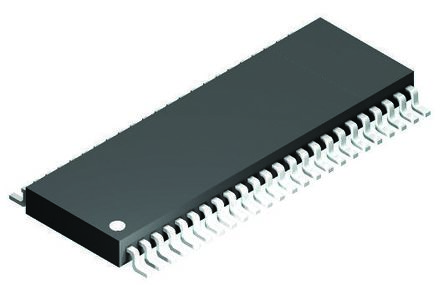
Image Preview