EPM7256AETI100-7N
Complex programmable logic devices with 256 macrocells in 100-TQFP package
Manufacturer: altera
series introduction
# Introduction to the EPM7256AETI100 - 7N Product Series
## 1. Overview
The EPM7256AETI100 - 7N belongs to a family of high - performance programmable logic devices (PLDs). These devices are designed to offer a flexible and efficient solution for a wide range of digital circuit design applications. With their programmability, they eliminate the need for custom - designed integrated circuits in many cases, providing designers with the ability to quickly prototype and implement complex logic functions.
## 2. Key Features
### 2.1 Logic Capacity
The EPM7256AETI100 - 7N offers a substantial logic capacity. It contains 256 macrocells, which are the building blocks for implementing various logic functions. These macrocells can be configured to perform combinational and sequential logic operations, allowing designers to create complex state machines, arithmetic circuits, and more. The large number of macrocells provides the flexibility to handle intricate design requirements without the need for multiple chips.
### 2.2 Speed Grade
The “- 7N” in the part number indicates the speed grade of the device. A lower speed grade number generally implies a faster device. The EPM7256AETI100 - 7N is capable of high - speed operation, with a propagation delay that enables it to meet the timing requirements of many high - performance applications. This makes it suitable for use in systems where fast data processing and signal propagation are crucial, such as in communication systems and high - speed data acquisition devices.
### 2.3 Package Type
The “T100” in the part number refers to the package type. The device comes in a 100 - pin Thin Quad Flat Pack (TQFP). This package offers a compact form factor, which is beneficial for applications where space is limited. The TQFP package also provides good thermal performance and electrical characteristics, ensuring reliable operation of the device.
### 2.4 Programmability
One of the most significant advantages of the EPM7256AETI100 - 7N is its programmability. It can be programmed using industry - standard programming tools and languages, such as VHDL (Very High - Speed Integrated Circuit Hardware Description Language) or Verilog. This allows designers to easily implement their logic designs and make changes as needed during the development process. The device uses Electrically Erasable Programmable Read - Only Memory (EEPROM) technology, which enables in - system programming (ISP). This means that the device can be programmed or reprogrammed while it is installed on the printed circuit board (PCB), eliminating the need for removal and external programming equipment.
## 3. Applications
### 3.1 Communication Systems
In communication systems, the EPM7256AETI100 - 7N can be used for tasks such as protocol conversion, data encoding and decoding, and signal processing. For example, it can be used to convert between different communication protocols, such as RS - 232 and Ethernet, allowing devices with different interfaces to communicate with each other. Its high - speed operation and large logic capacity make it suitable for handling the complex data processing requirements of modern communication systems.
### 3.2 Industrial Automation
In industrial automation, the device can be used to control and monitor various processes. It can be programmed to implement control algorithms for motors, sensors, and other industrial equipment. For instance, it can be used to control the speed and direction of a conveyor belt based on the input from sensors, or to monitor the temperature and pressure in a manufacturing process and trigger appropriate actions if the values go out of the specified range.
### 3.3 Consumer Electronics
In consumer electronics, the EPM7
Images for reference
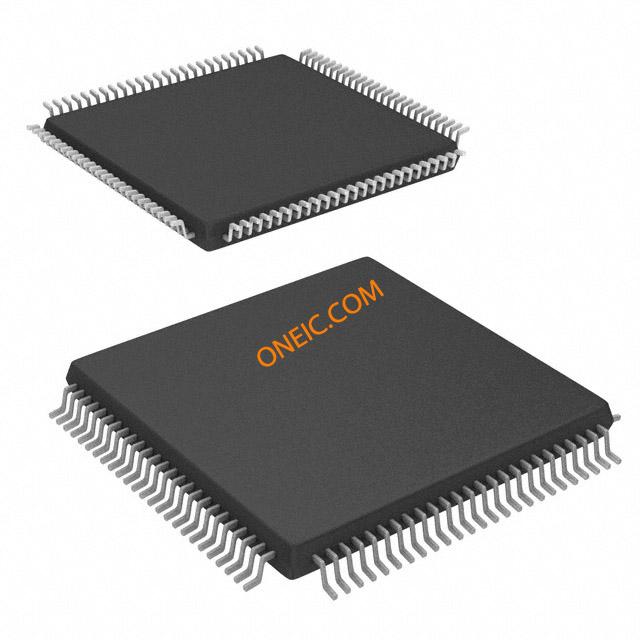
100TQFP
.jpg)
128-TQFP
Image Preview