EP2C8Q208I8
Cyclone II series FPGAs with 8256 cells and 208-pin QFP packaging
Manufacturer: altera
series introduction
# Introduction to the EP2C8Q208I8 Product Series
## 1. Overview
The EP2C8Q208I8 belongs to a specific and highly capable product series, typically falling within the field of programmable logic devices (PLDs). Programmable logic devices are integral components in modern electronics, offering flexibility and re - programmability that make them suitable for a wide range of applications.
## 2. Key Features
### 2.1 Logic Capacity
The "8" in the EP2C8Q208I8 indicates a certain level of logic capacity. It provides a substantial number of logic elements (LEs). These LEs are the building blocks of digital circuits within the device. With a sufficient number of LEs, designers can implement complex combinational and sequential logic functions, such as arithmetic circuits, state machines, and data processing units. This makes it suitable for applications that require high - level logic operations, like industrial automation control systems and advanced communication devices.
### 2.2 Package Type - Q208
The "Q208" refers to the package type of the device. A 208 - pin Quad Flat Package (QFP) is a common and well - established package design. It offers a relatively large number of input/output (I/O) pins, which is crucial for interfacing with other components in a system. The QFP package has a flat, square - shaped body with pins arranged around the perimeter. This design allows for easy soldering onto printed circuit boards (PCBs) using standard surface - mount technology (SMT) processes. The large number of I/O pins enables the EP2C8Q208I8 to communicate with multiple external devices, such as sensors, actuators, memory chips, and other integrated circuits.
### 2.3 Speed Grade - I8
The "I8" represents the speed grade of the device. A higher speed grade generally means that the device can operate at faster clock frequencies and has shorter propagation delays. This is essential for applications that require high - speed data processing and real - time response. For example, in high - speed communication systems like Ethernet switches or wireless base stations, the ability to process data quickly is crucial to maintain high - bandwidth data transfer rates and low latency.
### 2.4 Embedded Memory
The EP2C8Q208I8 is likely to have embedded memory resources. This can include random - access memory (RAM) blocks, which are used for storing intermediate data during the operation of the device. The embedded memory can be used for buffering data, implementing lookup tables, or storing configuration information. This on - chip memory reduces the need for external memory components, simplifying the overall system design and potentially reducing costs.
### 2.5 Programmability
As a programmable logic device, the EP2C8Q208I8 can be programmed using hardware description languages (HDLs) such as VHDL (Very High - Speed Integrated Circuit Hardware Description Language) or Verilog. Designers can describe the desired functionality of the circuit in these languages and then use synthesis tools to convert the HDL code into a configuration file that can be loaded onto the device. This programmability allows for rapid prototyping and design changes, as the device can be reprogrammed multiple times without the need for physical hardware modifications.
## 3. Applications
### 3.1 Industrial Automation
In industrial automation systems, the EP2C8Q208I8 can be used for controlling various processes. It can interface with sensors to collect data about the industrial environment, such as temperature, pressure, and position. Based on this data, it can control actuators like motors, valves, and relays to perform specific tasks. The high logic capacity and programmability of the device allow for the implementation of complex control
Images for reference

208-PQFP Pkg
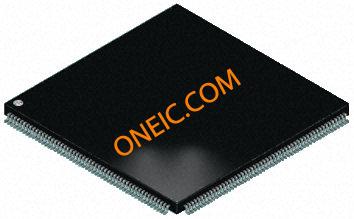
Image Preview

Image Preview