EP1C3T144C8N
Compact FPGAs for programmable logic with 144-pin TQFP packaging
Manufacturer: altera
series introduction
# Introduction to the EP1C3T144C8N Product Series
## 1. Overview
The EP1C3T144C8N belongs to a specific family of integrated circuits, typically falling under the field - programmable gate array (FPGA) category. FPGAs are semiconductor devices that offer a high degree of flexibility and reconfigurability, making them suitable for a wide range of applications in the electronics industry.
## 2. Key Features
### 2.1 Logic Capacity
The "3" in the EP1C3T144C8N model number indicates its approximate logic element (LE) count. This device has around 3,000 logic elements. Logic elements are the basic building blocks of an FPGA, used to implement combinational and sequential logic functions. With this number of LEs, it can handle moderately complex digital designs, such as small - scale control systems, simple signal processing algorithms, and basic communication protocols.
### 2.2 Package Type
The "T144" represents the package type. In this case, it is a 144 - pin thin quad flat pack (TQFP). The TQFP package offers a relatively compact form factor, which is beneficial for applications where space is limited. It also provides good thermal performance and electrical characteristics, allowing for reliable operation of the FPGA. The 144 pins provide a sufficient number of input/output (I/O) connections, enabling the device to interface with various external components such as sensors, actuators, and other integrated circuits.
### 2.3 Speed Grade
The "C8" indicates the speed grade of the FPGA. A lower speed grade number generally implies better performance in terms of propagation delay and maximum operating frequency. The C8 speed grade ensures that the EP1C3T144C8N can operate at relatively high clock frequencies, making it suitable for applications that require fast data processing and real - time response, such as high - speed data acquisition systems and certain types of communication interfaces.
### 2.4 Configuration
The "N" at the end of the model number often refers to the configuration type. It may indicate a specific non - volatile configuration option, which means that the FPGA can retain its configuration even when the power is turned off. This is particularly useful in applications where the FPGA needs to start up with a pre - defined configuration without the need for external configuration devices every time the power is applied.
## 3. Applications
### 3.1 Industrial Automation
In industrial automation systems, the EP1C3T144C8N can be used for controlling and monitoring various processes. It can interface with sensors to collect data such as temperature, pressure, and position, and then use its logic capabilities to process this data and generate appropriate control signals for actuators. For example, it can be used in a conveyor belt system to control the speed and direction of the belt based on the presence of objects detected by sensors.
### 3.2 Communication Systems
The FPGA can be employed in communication systems for tasks such as protocol conversion, signal modulation and demodulation, and error correction. It can support different communication standards, including Ethernet, USB, and serial communication protocols. For instance, in a wireless access point, the EP1C3T144C8N can be used to handle the data flow between the wireless interface and the wired network, ensuring seamless communication between different devices.
### 3.3 Consumer Electronics
In consumer electronics products, the EP1C3T144C8N can add functionality and flexibility. It can be used in smart home devices, such as smart thermostats or security cameras, to perform tasks like image processing, user interface control, and communication with other smart devices in the home network.
##
Images for reference

144-LQFP
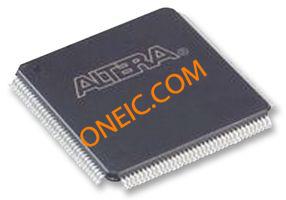
Image Preview

Image Preview