ATTINY87-SU
8-bit AVR microcontrollers with 8KB Flash, versatile voltage support
Manufacturer: ['microchip', 'atmel']
series introduction
# Introduction to the ATTINY87 - SU Product Series
## Overview
The ATTINY87 - SU is a remarkable product series within the microcontroller domain, developed by a leading semiconductor manufacturer. These microcontrollers are designed to offer a high - level of integration, performance, and flexibility, making them suitable for a wide range of applications. With their compact size and efficient power consumption, they are an ideal choice for projects where space and energy efficiency are crucial factors.
## Key Features
### 1. Processing Power
- **High - Performance CPU**: The ATTINY87 - SU is equipped with an 8 - bit AVR® CPU. This CPU architecture provides a good balance between processing speed and power consumption. It can execute instructions at a relatively high clock frequency, enabling it to handle complex tasks efficiently. For example, it can perform arithmetic operations, data processing, and control functions in real - time.
- **Instruction Set**: It supports a rich instruction set that includes arithmetic, logical, and data transfer instructions. This allows developers to write efficient and optimized code for their specific applications. The instruction set also includes bit - manipulation instructions, which are very useful for tasks such as controlling individual pins or reading sensor data.
### 2. Memory
- **Flash Memory**: The microcontroller comes with 8KB of in - system self - programmable Flash memory. This non - volatile memory is used to store the program code. The in - system self - programmable feature allows developers to update the firmware of the device without the need for external programming equipment in many cases. This is particularly useful for applications where field updates are required.
- **SRAM**: There is 512 bytes of SRAM available for data storage during program execution. This SRAM provides fast access to data, which is essential for applications that require quick data processing, such as sensor data buffering or real - time control algorithms.
- **EEPROM**: The ATTINY87 - SU also includes 512 bytes of EEPROM. EEPROM is non - volatile memory that can be used to store configuration data, calibration values, or other important information that needs to be retained even when the power is turned off.
### 3. I/O Capabilities
- **Multiple I/O Pins**: It has a sufficient number of general - purpose input/output (GPIO) pins. These pins can be configured as either inputs or outputs, allowing the microcontroller to interface with a variety of external devices. For example, they can be used to connect sensors, actuators, displays, or communication modules.
- **Pin Multiplexing**: Many of the GPIO pins support pin multiplexing, which means that a single pin can be used for multiple functions. This increases the flexibility of the microcontroller and allows developers to make the most of the available pins. For instance, a pin can be used as a digital input/output, an analog input, or a communication interface pin depending on the application requirements.
### 4. Peripherals
- **Timer/Counters**: The ATTINY87 - SU is equipped with multiple timer/counters. These timers can be used for a variety of purposes, such as generating accurate time delays, measuring time intervals, or generating pulse - width modulation (PWM) signals. PWM signals are commonly used for controlling the speed of motors, the brightness of LEDs, or the power output of a device.
- **Analog - to - Digital Converter (ADC)**: It features an ADC with multiple input channels. The ADC allows the microcontroller to convert analog signals from sensors (such as temperature sensors, light sensors, or pressure sensors) into digital values that can be processed by the CPU. This enables the microcontroller to interface with the real - world analog environment.
- **Communication Interfaces**: The product series supports various communication interfaces, including SPI (Serial Peripheral Interface
Images for reference
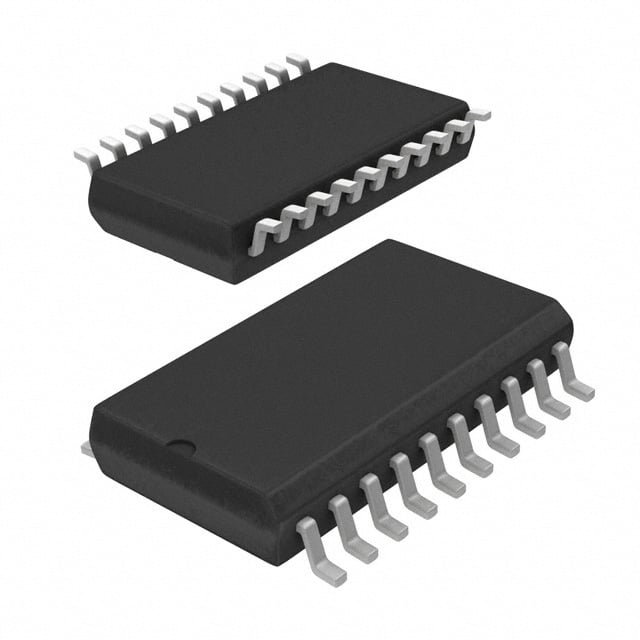
20-SOIC 0.295
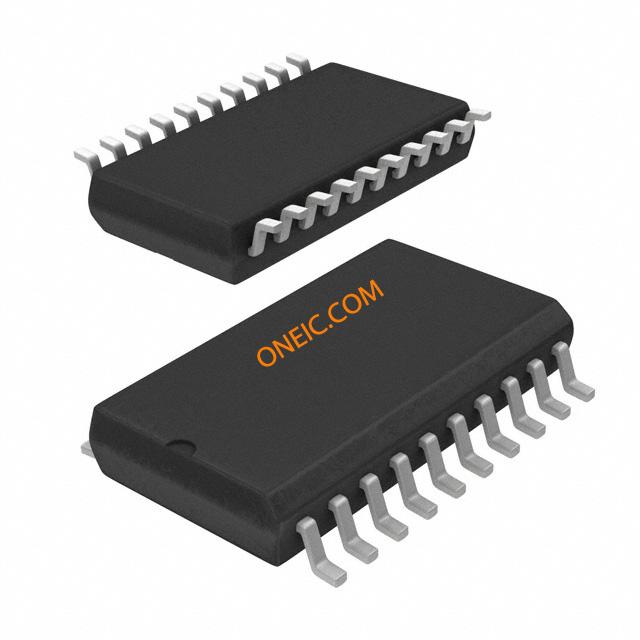
20-SOIC 0.295
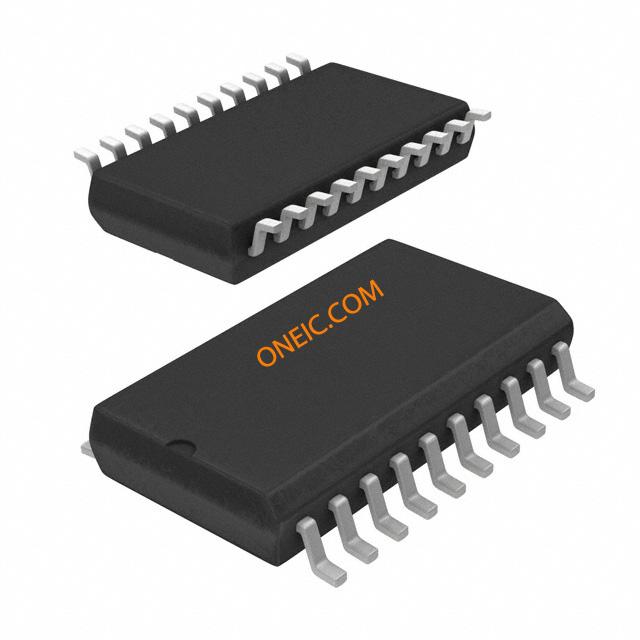
20-SOIC