ATSAM3S4CA-AU
32-bit ARM Cortex M3 microcontrollers with 256KB Flash, 48KB RAM, 100-pin LQFP
Manufacturer: ['microchip', 'atmel']
series introduction
# Introduction to the ATSAM3S4CA - AU Product Series
## 1. Overview
The ATSAM3S4CA - AU is a part of the SAM3S series of microcontrollers developed by Microchip Technology (formerly Atmel). These microcontrollers are based on the ARM Cortex - M3 processor core, which is known for its high - performance, low - power consumption, and excellent code density. The ATSAM3S4CA - AU offers a wide range of features and capabilities, making it suitable for a variety of applications in different industries.
## 2. Key Features
### 2.1 Processor Core
- **ARM Cortex - M3**: The ARM Cortex - M3 core provides a 32 - bit RISC architecture with a Harvard architecture, which allows for simultaneous access to instructions and data. It has a high - performance pipeline and a rich set of instructions, enabling efficient execution of code. The core operates at a maximum frequency of up to 84 MHz, providing fast processing capabilities for complex tasks.
- **Thumb - 2 Instruction Set**: The Thumb - 2 instruction set combines the code density of 16 - bit Thumb instructions with the performance of 32 - bit ARM instructions. This results in smaller code size and lower memory requirements, while still maintaining high performance.
### 2.2 Memory
- **Flash Memory**: The ATSAM3S4CA - AU is equipped with 256 KB of in - system programmable flash memory. This non - volatile memory is used to store the application code, and it can be easily reprogrammed during development or in the field. The flash memory has a high endurance, allowing for multiple write and erase cycles.
- **SRAM**: It has 64 KB of static random - access memory (SRAM). SRAM provides fast access to data, which is crucial for the efficient execution of code. The large SRAM size allows for the storage of variables, buffers, and data structures during program execution.
### 2.3 Peripherals
#### 2.3.1 Communication Peripherals
- **USART (Universal Synchronous/Asynchronous Receiver/Transmitter)**: Multiple USART interfaces are available, which support both synchronous and asynchronous communication modes. They can be used for serial communication with other devices such as sensors, displays, and modems. The USARTs support a wide range of baud rates, making them flexible for different communication requirements.
- **SPI (Serial Peripheral Interface)**: The SPI interface provides a high - speed serial communication protocol for connecting to external devices such as flash memories, ADCs, and DACs. It supports full - duplex communication and can operate at high clock frequencies, enabling fast data transfer.
- **I²C (Inter - Integrated Circuit)**: The I²C interface is a widely used serial communication protocol for connecting low - speed devices such as sensors, EEPROMs, and real - time clocks. It uses a two - wire bus, which simplifies the hardware design and reduces the number of pins required.
#### 2.3.2 Timers and Counters
- **General - Purpose Timers**: The microcontroller has multiple general - purpose timers that can be used for a variety of applications, such as generating PWM (Pulse Width Modulation) signals, measuring time intervals, and counting events. The timers can be configured in different modes, including up - counting, down - counting, and up - down counting.
- **Real - Time Counter (RTC)**: The RTC provides a low - power timer that can keep track of time even when the main processor is in a low - power mode. It can be used for applications such as scheduling tasks, logging events, and implementing time - of - day functions.
#### 2.3.3 Analog Per
Images for reference

100-LQFP

Image Preview
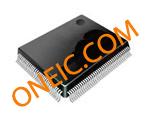
Image Preview