ATMEGA88-20MU
8-bit AVR microcontrollers with 8KB Flash, 3.3V/5V, 32-pin MLF package
Manufacturer: ['microchip', 'atmel']
series introduction
# ATMEGA88 - 20MU Product Series Introduction
## 1. Overview
The ATMEGA88 - 20MU is a member of the highly regarded AVR microcontroller family developed by Microchip Technology. This product series is designed to offer a powerful, flexible, and cost - effective solution for a wide range of embedded applications. With its rich set of features, high - performance capabilities, and low power consumption, the ATMEGA88 - 20MU is well - suited for use in various industries, including consumer electronics, industrial automation, automotive, and more.
## 2. Key Features
### 2.1 Microcontroller Core
- **AVR RISC Architecture**: The ATMEGA88 - 20MU is based on the advanced AVR Reduced Instruction Set Computer (RISC) architecture. This architecture allows for efficient execution of instructions, with most instructions being executed in a single clock cycle. As a result, it can achieve high processing speeds and excellent performance, enabling it to handle complex tasks with ease.
- **8 - bit CPU**: The 8 - bit central processing unit provides a good balance between performance and cost. It is capable of performing arithmetic and logical operations quickly, making it suitable for applications that require real - time processing, such as sensor data acquisition and control algorithms.
### 2.2 Memory
- **Flash Memory**: It comes with 8KB of in - system self - programmable Flash memory. This non - volatile memory is used to store the program code of the microcontroller. The in - system self - programming feature allows for easy firmware updates, which is crucial for product development and maintenance.
- **SRAM**: The ATMEGA88 - 20MU is equipped with 1KB of Static Random - Access Memory (SRAM). SRAM is used for storing variables and data during program execution. The sufficient amount of SRAM ensures that the microcontroller can handle complex algorithms and data processing tasks without running out of memory.
- **EEPROM**: There is also 512 bytes of Electrically Erasable Programmable Read - Only Memory (EEPROM). EEPROM is used for storing critical data that needs to be retained even when the power is turned off, such as calibration data, configuration settings, and user preferences.
### 2.3 Peripherals
#### 2.3.1 Timer/Counters
- **Multiple Timer/Counters**: The microcontroller features three timer/counters, including two 8 - bit timer/counters (Timer/Counter0 and Timer/Counter2) and one 16 - bit timer/counter (Timer/Counter1). These timer/counters can be used for a variety of purposes, such as generating accurate time delays, measuring time intervals, and generating Pulse Width Modulation (PWM) signals.
- **PWM Functionality**: The timer/counters support PWM mode, which is widely used in applications such as motor control, LED dimming, and power management. The PWM signals can be used to control the speed of a motor or the brightness of an LED by varying the duty cycle of the signal.
#### 2.3.2 Serial Communication Interfaces
- **USART**: It has a Universal Synchronous/Asynchronous Receiver/Transmitter (USART) interface. The USART allows for full - duplex serial communication, which is commonly used for communicating with other devices such as sensors, displays, and communication modules. It supports both synchronous and asynchronous communication modes, providing flexibility in different application scenarios.
- **SPI**: The Serial Peripheral Interface (SPI) is another communication interface available on the ATMEGA88 - 20MU. SPI is a high - speed serial communication protocol that is often used for communicating with external devices such as memory chips, sensors, and displays. It supports multi
Images for reference

32-QFN PKG
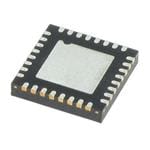
Image Preview
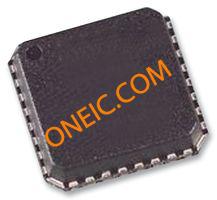
Image Preview