ATMEGA16M1-15AZ
8-bit AVR microcontrollers with 16KB Flash memory for versatile applications
Manufacturer: ['microchip', 'atmel']
series introduction
# Introduction to the ATMEGA16M1 - 15AZ Product Series
## 1. Overview
The ATMEGA16M1 - 15AZ is a member of the renowned AVR microcontroller family developed by Microchip Technology. This product series is specifically engineered to meet the diverse requirements of various embedded systems, offering a balance of performance, functionality, and cost - effectiveness. With its rich set of features and robust design, it has become a popular choice among engineers and developers working on projects in automotive, industrial control, and consumer electronics.
## 2. Key Features
### 2.1 Microcontroller Core
- **AVR Architecture**: Based on the high - performance AVR RISC (Reduced Instruction Set Computing) architecture, the ATMEGA16M1 - 15AZ can execute instructions in a single clock cycle, enabling efficient and fast processing. This results in a high - throughput performance, making it suitable for applications that require real - time data processing.
- **16 - MHz Clock Frequency**: The microcontroller operates at a maximum clock frequency of 16 MHz, which allows for rapid execution of code and quick response to external events. This high clock speed is beneficial for applications such as motor control and sensor data acquisition.
### 2.2 Memory
- **16 KB Flash Memory**: It comes with 16 kilobytes of in - system self - programmable Flash memory. This non - volatile memory is used to store the program code, allowing for easy reprogramming during development and in - field updates.
- **512 Bytes EEPROM**: The 512 - byte Electrically Erasable Programmable Read - Only Memory (EEPROM) provides a reliable storage solution for non - volatile data, such as calibration parameters and configuration settings.
- **1 KB SRAM**: The 1 - kilobyte Static Random - Access Memory (SRAM) is used for storing temporary data during program execution, such as variables and stack information.
### 2.3 Peripherals
#### 2.3.1 Communication Interfaces
- **SPI (Serial Peripheral Interface)**: The SPI interface enables high - speed serial communication between the microcontroller and other devices, such as sensors, displays, and external memory chips. It supports full - duplex communication and can operate at different clock speeds, providing flexibility in system design.
- **USART (Universal Synchronous/Asynchronous Receiver/Transmitter)**: The USART interface allows for both synchronous and asynchronous serial communication, making it suitable for a wide range of applications, including communication with other microcontrollers, modems, and PC serial ports.
- **I²C (Inter - Integrated Circuit)**: The I²C interface is a multi - master, multi - slave serial communication protocol that is widely used for connecting low - speed devices, such as sensors and EEPROMs. It simplifies the wiring and reduces the number of pins required for communication.
#### 2.3.2 Timers/Counters
- **Three Timers/Counters**: The ATMEGA16M1 - 15AZ is equipped with three timers/counters, which can be used for a variety of purposes, such as generating accurate time delays, measuring time intervals, and controlling PWM (Pulse Width Modulation) signals. The timers can operate in different modes, including normal mode, CTC (Clear Timer on Compare Match) mode, and PWM mode.
#### 2.3.3 Analog - to - Digital Converter (ADC)
- **8 - Channel 10 - bit ADC**: The 8 - channel 10 - bit ADC allows the microcontroller to convert analog signals from external sensors into digital values. This is useful for applications such as temperature sensing, light sensing, and voltage monitoring. The 10 - bit
Images for reference

32-TQFP
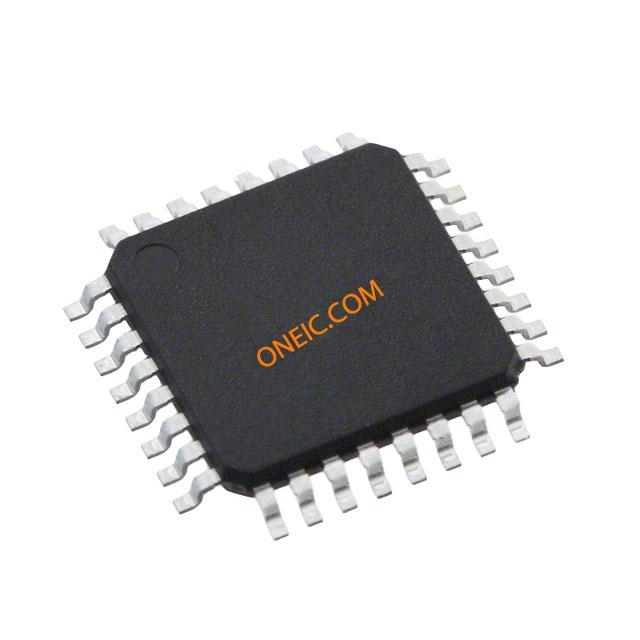
AT42QT1111-AU
Image Preview