ATMEGA16A-MU
8-bit AVR microcontrollers with 16KB Flash, 1KB RAM, 44-pin QFN packaging
Manufacturer: ['microchip', 'atmel']
series introduction
# ATMEGA16A - MU Product Series Introduction
## 1. Overview
The ATMEGA16A - MU is a highly versatile and powerful microcontroller product series developed by Microchip Technology. It belongs to the AVR 8 - bit microcontroller family, which is well - known for its high performance, low power consumption, and rich peripheral features. This series is designed to meet the diverse needs of various embedded systems, ranging from simple consumer electronics to complex industrial control applications.
## 2. Key Features
### 2.1 Processor Core
- **AVR RISC Architecture**: The ATMEGA16A - MU is based on the advanced AVR Reduced Instruction Set Computer (RISC) architecture. This architecture allows for efficient execution of instructions, with most instructions being executed in a single clock cycle. As a result, it can achieve high processing speeds, enabling rapid data processing and real - time control.
- **16 MHz Clock Frequency**: With a maximum clock frequency of 16 MHz, the microcontroller can handle complex tasks quickly. This high - speed operation makes it suitable for applications that require fast response times, such as motor control and sensor data acquisition.
### 2.2 Memory
- **16 KB Flash Memory**: The on - board 16 KB of in - system self - programmable Flash memory provides ample space for storing the program code. This non - volatile memory allows the microcontroller to retain the program even when the power is turned off, making it ideal for long - term operation.
- **1 KB SRAM**: The 1 KB of Static Random - Access Memory (SRAM) is used for storing temporary data during program execution. It provides fast access to data, which is crucial for efficient processing and handling of variables and buffers.
- **512 Bytes EEPROM**: The Electrically Erasable Programmable Read - Only Memory (EEPROM) is used for storing non - volatile data that needs to be retained even after power cycling. It can be used to store configuration parameters, calibration data, and other important information.
### 2.3 Peripherals
#### 2.3.1 General - Purpose Input/Output (GPIO)
- The ATMEGA16A - MU has 32 programmable GPIO pins. These pins can be configured as either input or output, allowing for easy interfacing with external devices such as sensors, actuators, and displays. The GPIO pins also support various interrupt modes, enabling the microcontroller to respond quickly to external events.
#### 2.3.2 Timer/Counters
- **Three Timer/Counters**: It is equipped with three timer/counters, including two 8 - bit timer/counters (Timer0 and Timer2) and one 16 - bit timer/counter (Timer1). These timer/counters can be used for a variety of applications, such as generating accurate time delays, measuring time intervals, and generating Pulse Width Modulation (PWM) signals for motor control.
#### 2.3.3 Serial Communication Interfaces
- **Universal Synchronous/Asynchronous Receiver/Transmitter (USART)**: The USART provides full - duplex serial communication, allowing the microcontroller to communicate with other devices such as computers, sensors, and wireless modules. It supports various baud rates and data formats, making it highly flexible for different communication requirements.
- **Two - Wire Serial Interface (TWI)**: Also known as the I2C interface, the TWI allows for easy communication with other I2C - compatible devices. It is commonly used for connecting sensors, EEPROMs, and other peripheral devices in a multi - device system.
- **Serial Peripheral Interface (SPI)**: The SPI interface provides high - speed serial communication between the microcontroller and other SPI - compatible devices. It is suitable for
Images for reference

44-VFQFN Exposed Pad
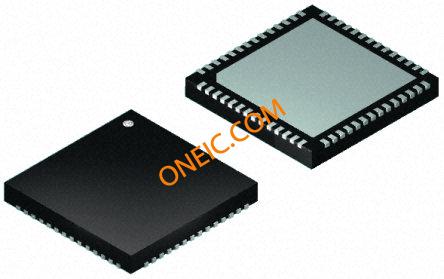
Image Preview
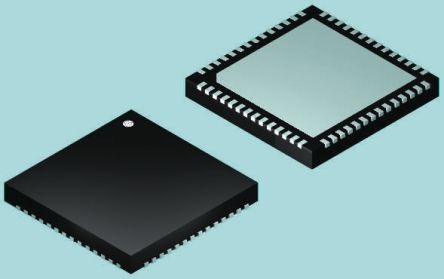
Image Preview