AT89C51CC01UA
8-bit microcontrollers with 32KB flash memory for versatile applications
Manufacturer: ['microchip', 'atmel']
series introduction
# Introduction to the AT89C51CC01UA Product Series
## 1. Overview
The AT89C51CC01UA is a highly versatile and reliable microcontroller product series developed by Atmel (now part of Microchip Technology). This series is based on the well - known 8051 architecture, which has been a cornerstone in the field of embedded systems for decades. The AT89C51CC01UA offers a rich set of features and capabilities, making it suitable for a wide range of applications, from simple consumer electronics to complex industrial control systems.
## 2. Key Features
### 2.1. Microcontroller Core
- **8 - bit CPU**: The AT89C51CC01UA is powered by an 8 - bit 8051 - compatible CPU. This architecture provides a good balance between performance and simplicity, allowing for efficient execution of instructions. It has a well - defined instruction set that includes arithmetic, logical, data transfer, and control instructions, enabling developers to implement a wide variety of algorithms.
- **On - chip ROM and RAM**: It comes with a certain amount of on - chip Read - Only Memory (ROM) and Random - Access Memory (RAM). The ROM stores the program code, which is non - volatile, ensuring that the program remains intact even when the power is turned off. The RAM is used for temporary data storage during program execution, such as variables and intermediate results.
### 2.2. Peripherals
#### 2.2.1. Timer/Counters
- The AT89C51CC01UA is equipped with multiple timer/counters. These can be used for a variety of purposes, such as generating time delays, measuring time intervals, and generating pulse - width modulation (PWM) signals. For example, in a motor control application, the timer/counters can be used to generate the appropriate PWM signals to control the speed and direction of the motor.
#### 2.2.2. Serial Communication Interfaces
- It supports serial communication interfaces, such as Universal Asynchronous Receiver/Transmitter (UART). This allows the microcontroller to communicate with other devices, such as computers, sensors, or other microcontrollers, using serial communication protocols. Serial communication is widely used in applications where data needs to be transferred over long distances or between different types of devices.
#### 2.2.3. Input/Output (I/O) Ports
- The microcontroller has a number of I/O ports that can be configured as either input or output. These ports can be used to interface with external devices, such as sensors, actuators, displays, and switches. For instance, an I/O port can be used to read the state of a push - button switch or to control the operation of an LED.
### 2.3. Low - Power Operation
- The AT89C51CC01UA is designed to operate with low power consumption. It has different power - saving modes, such as idle mode and power - down mode. In idle mode, the CPU stops operating while the peripherals continue to function, reducing power consumption. In power - down mode, the microcontroller enters a sleep state, consuming minimal power, and can be awakened by an external interrupt. This makes it suitable for battery - powered applications, where power efficiency is crucial.
## 3. Development Tools and Ecosystem
### 3.1. Programming Tools
- There are a variety of programming tools available for the AT89C51CC01UA. These include in - circuit programmers, which allow developers to write the program code directly into the microcontroller's ROM. Additionally, integrated development environments (IDEs) such as Keil uVision can be used to write, compile, and debug the code. These
Images for reference
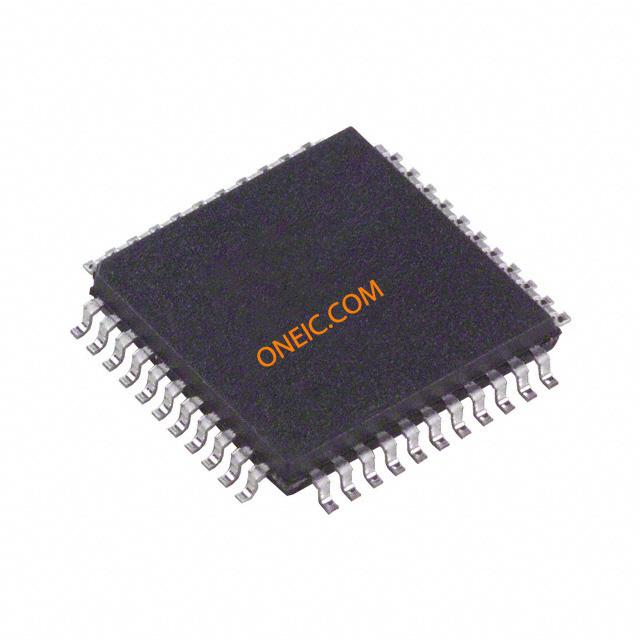
44-LQFP PKG
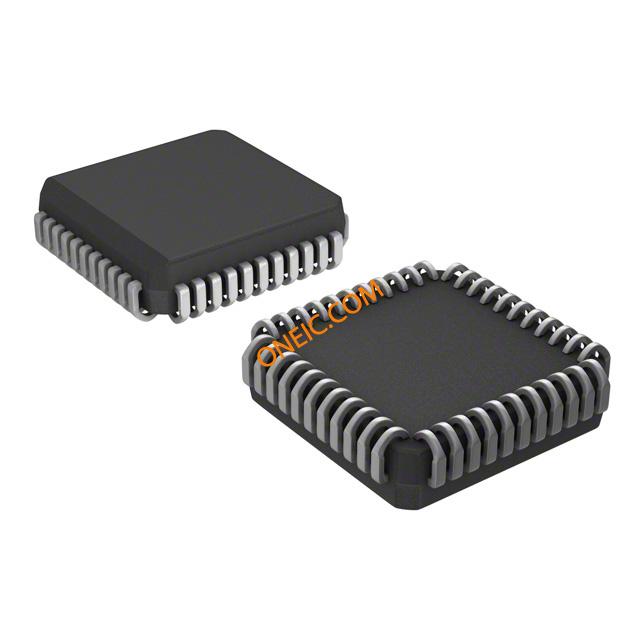
44-LCC (J-Lead)
Image Preview