ADXL345BCCZ
Triple-axis digital accelerometers with SPI/I2C interfaces in LGA package
Manufacturer: analog-devices
series introduction
# ADXL345BCCZ Product Series Introduction
## 1. Overview
The ADXL345BCCZ is a highly versatile and advanced product series offered by Analog Devices. It belongs to the family of micro - electro - mechanical systems (MEMS) accelerometers, which are designed to accurately measure acceleration forces in three perpendicular axes (X, Y, and Z). These accelerometers are widely used in a variety of applications due to their high performance, small size, and low power consumption.
## 2. Key Features
### 2.1 High Sensitivity
The ADXL345BCCZ offers high - resolution measurement of acceleration. It can detect even the slightest changes in acceleration, with a sensitivity that can be adjusted according to the application requirements. This high sensitivity makes it suitable for applications such as vibration monitoring, where detecting small vibrations is crucial.
### 2.2 Wide Dynamic Range
It has a wide dynamic range, which allows it to measure both low - level and high - level acceleration forces. The device can handle accelerations from ±2 g to ±16 g, where “g” is the acceleration due to gravity (approximately 9.81 m/s²). This wide range makes it adaptable to different scenarios, from gentle movements in consumer electronics to high - impact events in industrial applications.
### 2.3 Low Power Consumption
One of the significant advantages of the ADXL345BCCZ is its low power consumption. This makes it ideal for battery - powered devices, such as wearable fitness trackers and wireless sensor nodes. The device can operate in different power modes, including a low - power mode that further reduces energy consumption when the system is in standby or idle state.
### 2.4 Digital Output
The accelerometer provides a digital output in the form of a 16 - bit resolution data. This digital output simplifies the interface with microcontrollers and other digital systems. It uses the I²C or SPI communication protocols, which are widely supported in the electronics industry, enabling easy integration into existing designs.
### 2.5 Small Form Factor
The ADXL345BCCZ comes in a small, surface - mount package. Its compact size makes it suitable for applications where space is limited, such as mobile phones, tablets, and small - sized IoT devices.
## 3. Functional Block Diagram and Working Principle
### 3.1 MEMS Sensing Element
The heart of the ADXL345BCCZ is the MEMS sensing element. It consists of a micro - machined structure that is sensitive to acceleration forces. When an acceleration is applied to the device, the MEMS structure deflects, and this deflection is converted into an electrical signal.
### 3.2 Signal Conditioning Circuit
The electrical signal from the MEMS sensing element is then processed by the signal conditioning circuit. This circuit amplifies the weak signal, filters out noise, and performs analog - to - digital conversion.
### 3.3 Digital Interface
The digital output from the signal conditioning circuit is made available through the I²C or SPI interface. The host microcontroller can then read the acceleration data from the device and use it for further processing.
## 4. Applications
### 4.1 Consumer Electronics
- **Smartphones and Tablets**: In smartphones and tablets, the ADXL345BCCZ is used for screen orientation detection. It can sense the device's orientation (portrait or landscape) and automatically adjust the display accordingly. It is also used in gaming applications to detect the user's movements, providing a more immersive gaming experience.
- **Wearable Devices**: Wearable fitness trackers use the accelerometer to count steps, measure activity levels, and monitor sleep patterns. The low - power consumption of the ADXL345BCCZ ensures long battery life
Images for reference

14-LGA PKG
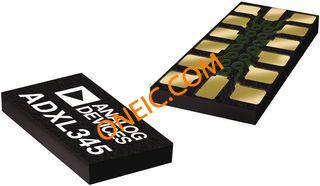
Image Preview
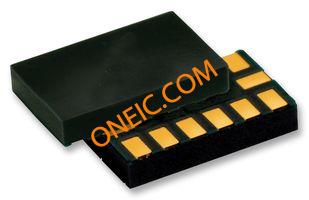
Image Preview