ADSP-BF516BSWZ-4
Low-power digital signal processors for advanced embedded connectivity
Manufacturer: ['rochester', 'analog-devices']
series introduction
# Introduction to the ADSP - BF516BSWZ - 4 Product Series
## 1. Overview
The ADSP - BF516BSWZ - 4 belongs to Analog Devices' Blackfin® family of embedded processors. These processors are well - known for their high - performance, low - power consumption, and flexibility, making them suitable for a wide range of applications in the embedded systems domain.
## 2. Key Features
### 2.1 Processor Core
- **High - Performance Core**: The ADSP - BF516BSWZ - 4 is built around a Blackfin processor core. It operates at a clock speed that enables efficient execution of complex algorithms. The core architecture combines a RISC - like instruction set with a DSP - optimized instruction set, allowing it to handle both general - purpose computing tasks and digital signal processing operations with ease.
- **Multiply - Accumulate (MAC) Unit**: It is equipped with a powerful MAC unit, which is essential for performing operations such as filtering, convolution, and matrix multiplications. These operations are commonly used in audio and video processing, as well as in communication systems.
### 2.2 Memory
- **On - Chip Memory**: The device has a significant amount of on - chip memory, including both program memory and data memory. This on - chip memory reduces the need for external memory access, thereby improving the overall system performance and reducing power consumption. The memory organization is designed to support efficient data transfer and storage, enabling fast execution of code.
- **External Memory Interface**: In addition to the on - chip memory, the ADSP - BF516BSWZ - 4 provides an external memory interface. This allows for the expansion of memory capacity when required, making it suitable for applications that demand large amounts of data storage, such as multimedia systems and data - intensive industrial applications.
### 2.3 Peripherals
- **UART (Universal Asynchronous Receiver - Transmitter)**: The UART peripheral enables serial communication with other devices. It is commonly used for communication with sensors, actuators, and other microcontrollers. The UART supports various baud rates, allowing for flexible communication configurations.
- **SPI (Serial Peripheral Interface)**: The SPI interface provides a high - speed serial communication option. It is often used for connecting to external devices such as flash memory, sensors, and displays. The SPI interface supports multiple slave devices, enabling efficient communication in a multi - device system.
- **I²C (Inter - Integrated Circuit)**: The I²C interface is a widely used serial communication protocol for connecting low - speed devices. It is suitable for communicating with sensors, EEPROMs, and other integrated circuits. The I²C interface on the ADSP - BF516BSWZ - 4 supports both master and slave modes, providing flexibility in system design.
- **Timer/Counter Modules**: The device includes multiple timer/counter modules. These modules can be used for various purposes, such as generating timing signals, measuring time intervals, and implementing PWM (Pulse Width Modulation) signals. PWM signals are commonly used in motor control applications.
### 2.4 Power Management
- **Low - Power Modes**: The ADSP - BF516BSWZ - 4 offers several low - power modes, which are crucial for battery - powered applications. These low - power modes allow the processor to conserve energy when it is not actively performing tasks. The device can enter different levels of sleep modes, and wake - up quickly when required, ensuring a balance between power consumption and system responsiveness.
## 3. Applications
### 3.1 Audio Processing
- **Audio Amplification and Equalization**: The high - performance DSP capabilities of the ADSP - BF516BSWZ - 4 make
Images for reference
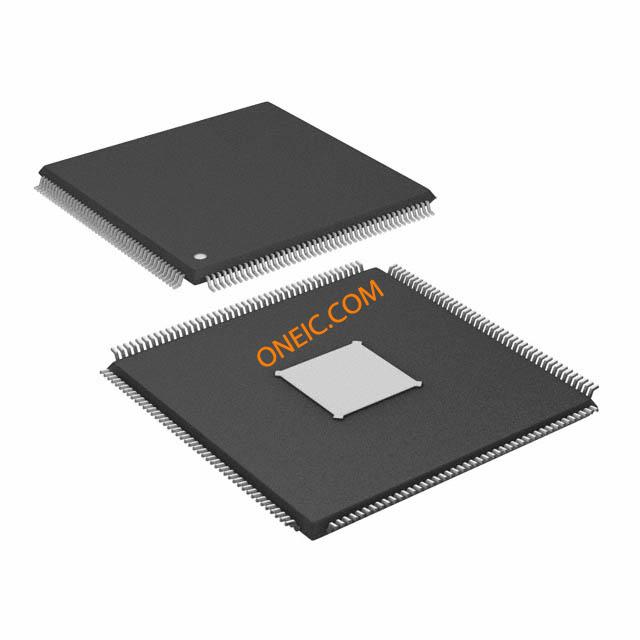
176-LQFP-EP
Image Preview