AD558JNZ
8-bit digital-to-analog converters in 16-pin DIP packages
Manufacturer: ['rochester', 'analog-devices']
series introduction
# AD558JNZ Product Series Introduction
## 1. Overview
The AD558JNZ is a highly regarded product series within the realm of analog - to - digital and digital - to - analog conversion technology. Manufactured by Analog Devices, a leader in high - performance analog, mixed - signal, and digital signal processing integrated circuits, the AD558JNZ offers a reliable and efficient solution for a wide range of applications that require accurate signal conversion.
## 2. Key Features
### 2.1 Resolution and Accuracy
- **Resolution**: The AD558JNZ typically provides a specific bit - resolution, which determines the number of discrete levels it can represent. This high - resolution capability allows for precise conversion of analog signals to digital values or vice versa. For example, a higher bit - resolution means that it can distinguish smaller changes in the input signal, resulting in more accurate representation of the original signal.
- **Accuracy**: It offers excellent linearity and low error rates. The linearity ensures that the output of the converter is a linear function of the input, minimizing distortion. Low error rates in terms of offset error, gain error, and integral non - linearity (INL) and differential non - linearity (DNL) contribute to the overall accuracy of the conversion process. This makes it suitable for applications where precise measurement and control are crucial.
### 2.2 Conversion Speed
The AD558JNZ is designed to achieve relatively fast conversion times. This is important in applications where real - time data processing is required. For instance, in high - speed data acquisition systems, the ability to quickly convert analog signals to digital data allows for the capture of rapidly changing signals without significant loss of information.
### 2.3 Power Consumption
It is engineered with power - efficiency in mind. Low power consumption is beneficial in battery - powered devices or applications where energy conservation is a priority. The AD558JNZ can operate with relatively low power requirements, extending the battery life of portable devices and reducing overall energy costs in larger systems.
### 2.4 Compatibility
- **Interface Compatibility**: The product series is designed to be compatible with common digital interfaces. It can easily interface with microcontrollers, digital signal processors (DSPs), and other digital devices. This compatibility simplifies the integration process, allowing designers to incorporate the AD558JNZ into existing systems without significant modifications.
- **Voltage Compatibility**: It can operate within a specified voltage range, which is compatible with a variety of power supplies commonly used in electronic systems. This flexibility in voltage compatibility makes it suitable for a wide range of applications with different power requirements.
## 3. Functional Block Diagram and Working Principle
### 3.1 Block Diagram
The AD558JNZ consists of several key functional blocks, including an input buffer, a conversion core, and an output buffer. The input buffer is responsible for conditioning the input signal, ensuring that it is in a suitable form for the conversion process. The conversion core performs the actual analog - to - digital or digital - to - analog conversion, depending on the mode of operation. The output buffer then provides the converted signal with appropriate impedance matching and drive capabilities.
### 3.2 Working Principle
- **Analog - to - Digital Conversion (ADC Mode)**: When operating in ADC mode, the input analog signal is sampled at regular intervals. The sampled signal is then quantized into a digital value based on the resolution of the converter. The conversion process involves comparing the input signal with a set of reference voltages and generating a digital code that represents the amplitude of the input signal.
- **Digital - to - Analog Conversion (DAC Mode)**: In DAC mode, the digital input code is received by the converter. The converter then uses a set of internal resistors or other components to generate an analog output
Images for reference
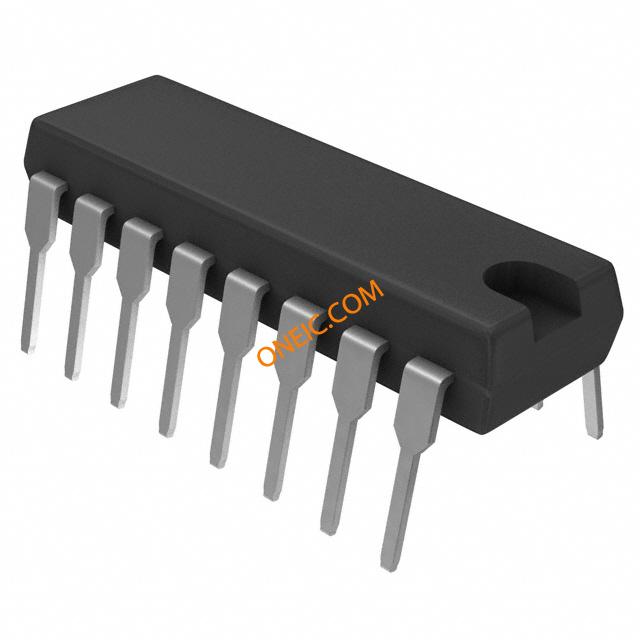
16-DIP SOT38-1
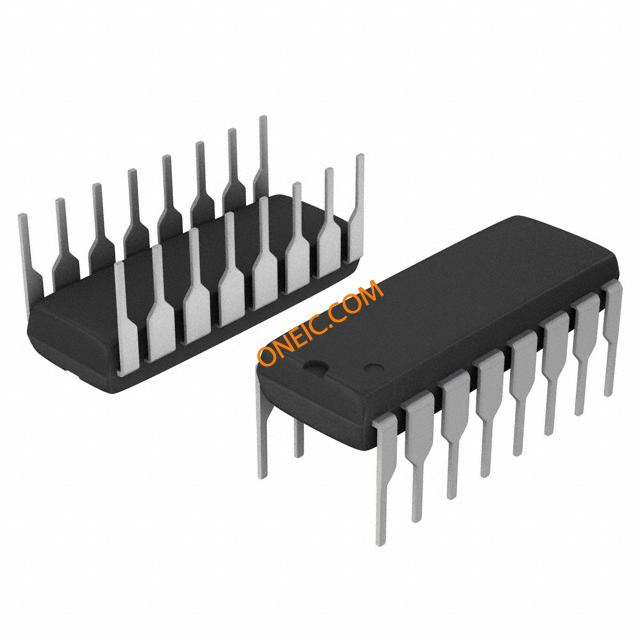
16-Dip
Image Preview